Quick answer
Dog focus training should teach reorientation, not unbroken eye contact. First reward voluntary check-ins in a quiet place. Add a simple cue only after the dog is already turning toward you predictably. Then introduce one mild distraction at a distance where the dog can notice it and still reorient. If treats suddenly “stop working,” the first adjustment is usually more distance or less distraction—not a more forceful cue. Build attention as a flexible skill you can use before recall, leash walking, stay, or moving away.
Define focus as a behavior you can actually see
The general reward, cue, and proofing framework is covered in Dog Training Basics. Here the target behavior is narrower: the dog notices the environment and then reconnects with you.
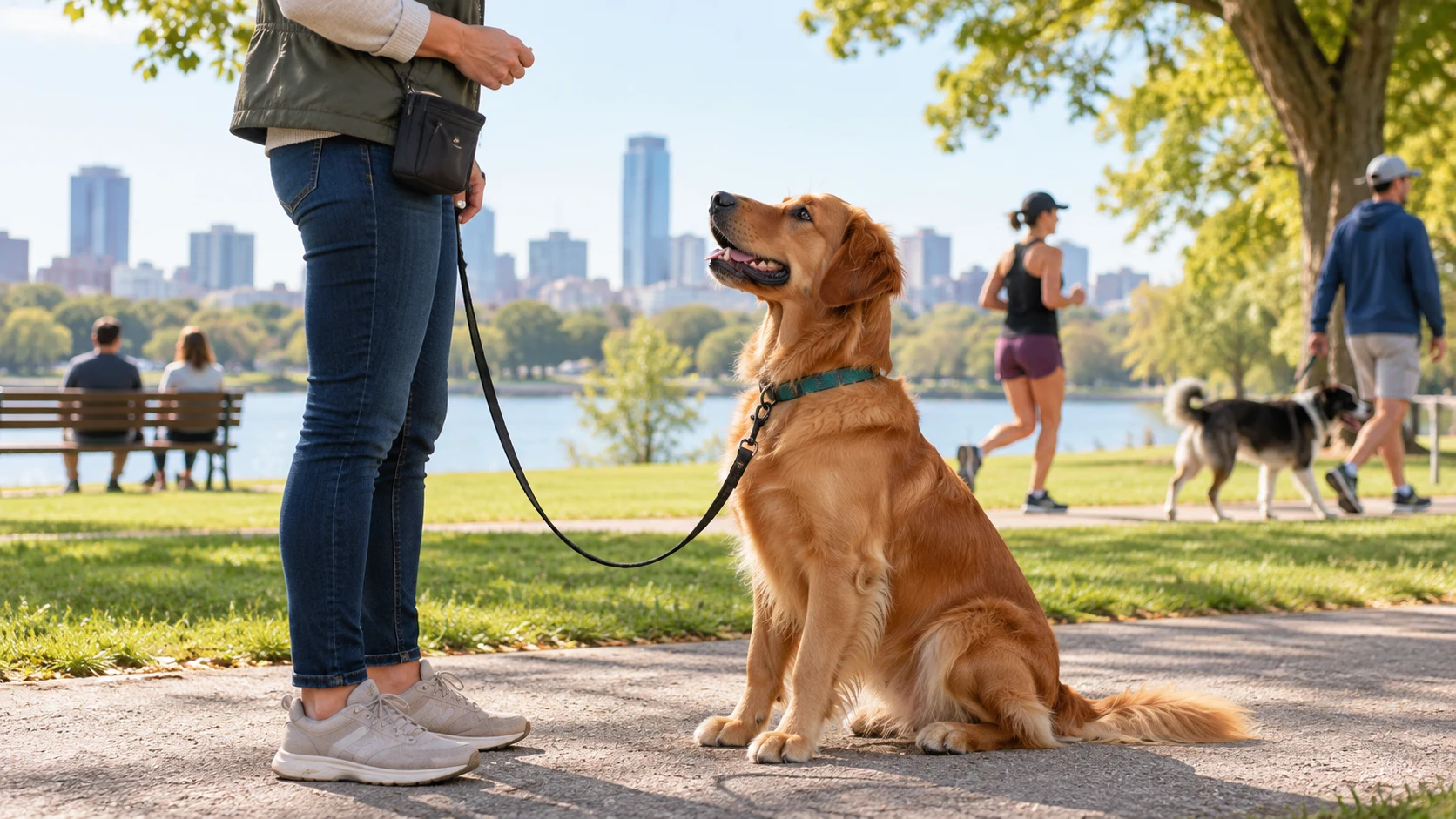
For everyday training, focus can be a head turn, eye contact, or orientation toward your body. It does not need to be prolonged staring. A brief check-in is often enough to deliver the next cue, change direction, or reinforce the dog before the distraction becomes more difficult.
This page teaches the attention step. It does not replace the full behavior that comes next.
Build offered attention before relying on a cue
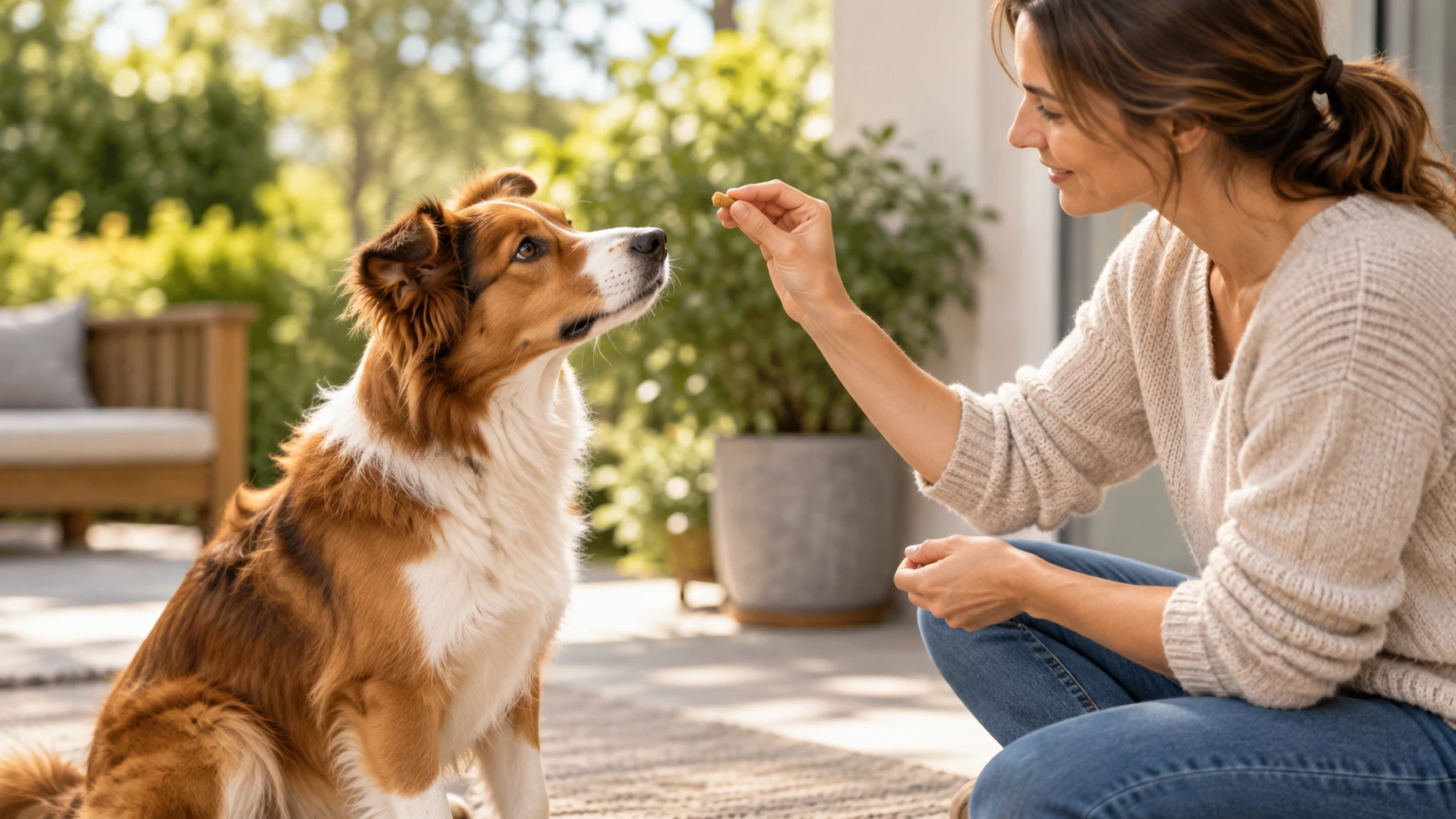
Start in a quiet place with rewards ready but out of sight. Wait. When the dog voluntarily glances toward you, mark and reward. Then let the dog look away so another check-in can happen naturally.
This teaches that reconnecting with you is valuable without making the dog dependent on hearing their name repeatedly. When check-ins are happening often, add a cue such as the dog’s name, “look,” or “watch” just before you expect the orientation.
Say the cue once. If you need to repeat it, the current setup is probably too difficult or the behavior is not yet fluent enough.
Train focus around distractions step by step
Step 1: Reinforce quick check-ins in an easy place
Reward a glance or head turn toward you. Keep the criterion small. You are building a habit of reconnecting, not asking for long eye contact.
After the reward, reset by allowing the dog to look away again. That creates many clean opportunities to choose you.
Step 2: Add one focus cue
When offered check-ins are frequent, say the cue once just before the dog is likely to turn. Mark and reward the orientation.
Gradually remove obvious prompts such as holding food near your face. The reward should appear after the response rather than functioning as a permanent lure.
Step 3: Add a mild distraction at a generous distance
Use something the dog can notice without becoming absorbed: a stationary toy, a seated person, or low-level movement far away. Let the dog notice it. Then wait for or cue a reorientation and reward.
If the dog cannot turn away, increase distance or make the distraction easier. Do not keep repeating the cue while the dog is fixated.
Step 4: Reward noticing and returning, not pretending the distraction is invisible
A practical goal is often: see the distraction, process it, then reconnect. The dog does not have to stare at you before anything interesting enters the picture.
At an appropriate distance, mark and reward the return of attention. This gives you a usable pattern in real environments instead of demanding constant eye contact.
Step 5: Change one distraction variable at a time
Distractions become harder through proximity, movement, novelty, sound, smell, duration, or emotional significance. Increase one dimension while keeping the others manageable.
A person sitting still can stand up. Later they can walk. A dog at a great distance can become a little closer. A toy can move after the dog can reorient around it while stationary.
Step 6: Use rewards that fit the challenge
A reward that works in the kitchen may not matter near a strong smell or moving dog. Increase reward value when the environment becomes harder. Sometimes the environment itself can be the reward: after a successful check-in, release the dog to resume safe sniffing.
That pattern makes attention a route back to exploration instead of always ending it.
Use a distraction ladder
| Level | Example | What success looks like |
|---|
| Easy | Quiet room or familiar yard | Frequent check-ins |
| Mild | Stationary object or distant person | Prompt reorientation |
| Moderate | Distant movement or stronger scent | Calm reconnecting |
| Harder | Closer or more valuable activity | Brief, usable orientation |
Do not treat the ladder as a fixed ranking. The same distraction can be easy for one dog and overwhelming for another. Your dog’s ability to reorient is the useful measure.
If treats stop working outside, change the environment first
A dog who normally takes food but suddenly cannot eat, orient, or respond around a distraction may be telling you that the situation is too intense for ordinary training. Increasing treat value can help when the challenge is only moderately harder, but it cannot compensate for every level of arousal or distress.
Create distance, reduce movement, shorten the exposure, or leave the situation. Then resume at a level where the dog can notice the distraction and still recover attention.
Apply focus to the next real-life skill
Focus is a bridge, not an end goal. Once the dog reorients, choose the behavior the situation actually requires.
- For a full return to you, use the separate recall training plan.
- On walks, use check-ins to support loose-leash walking before the leash tightens.
- Around an object the dog should not take, switch to the specific leave-it behavior.
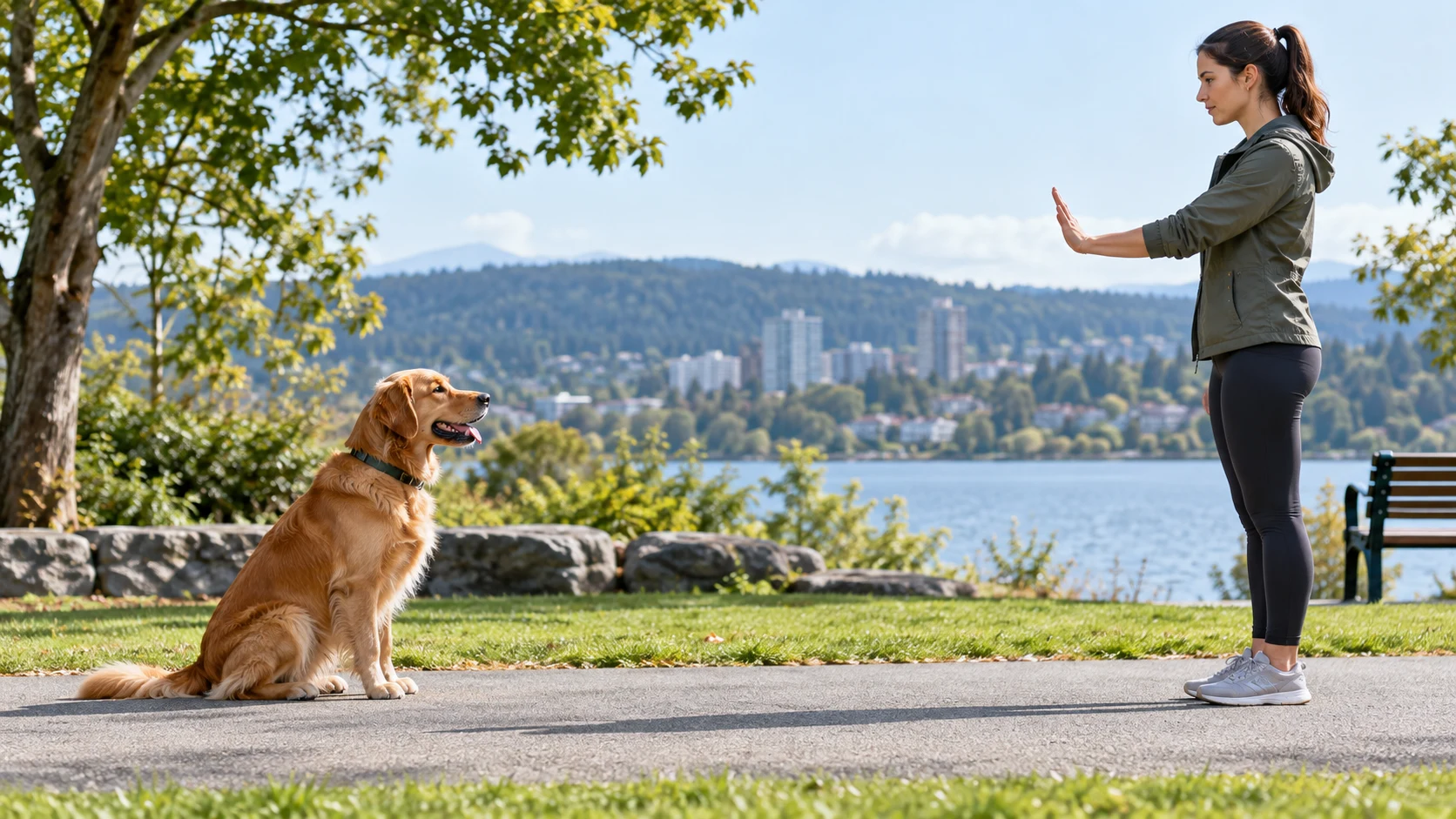
- When the dog must hold a position, build the separate stay rather than expecting eye contact to substitute for duration.
This division keeps each cue clear and prevents “focus” from becoming a vague command for every difficult situation.
Know when focus drills are not enough
Barking, lunging, panic, freezing, escape attempts, or aggressive behavior can involve fear, frustration, or other problems that ordinary focus practice does not diagnose. Do not keep moving closer to a trigger simply because the dog can sometimes take food.
Increase safety and distance, avoid rehearsing high-risk situations, and seek qualified, reward-based professional help when the dog is distressed or the behavior creates risk to people or animals.