Quick answer
To stop a dog pulling on the leash, teach one simple rule: a slack leash makes useful things happen; a tight leash does not move the walk forward. Begin in an easy place, reward near you before the leash tightens, and use turns or brief pauses when tension appears. Do not make the whole walk a test. Use sniffing and forward movement as rewards, and choose quieter routes or separate training sessions when the environment is too difficult for learning.
Know what loose-leash walking means
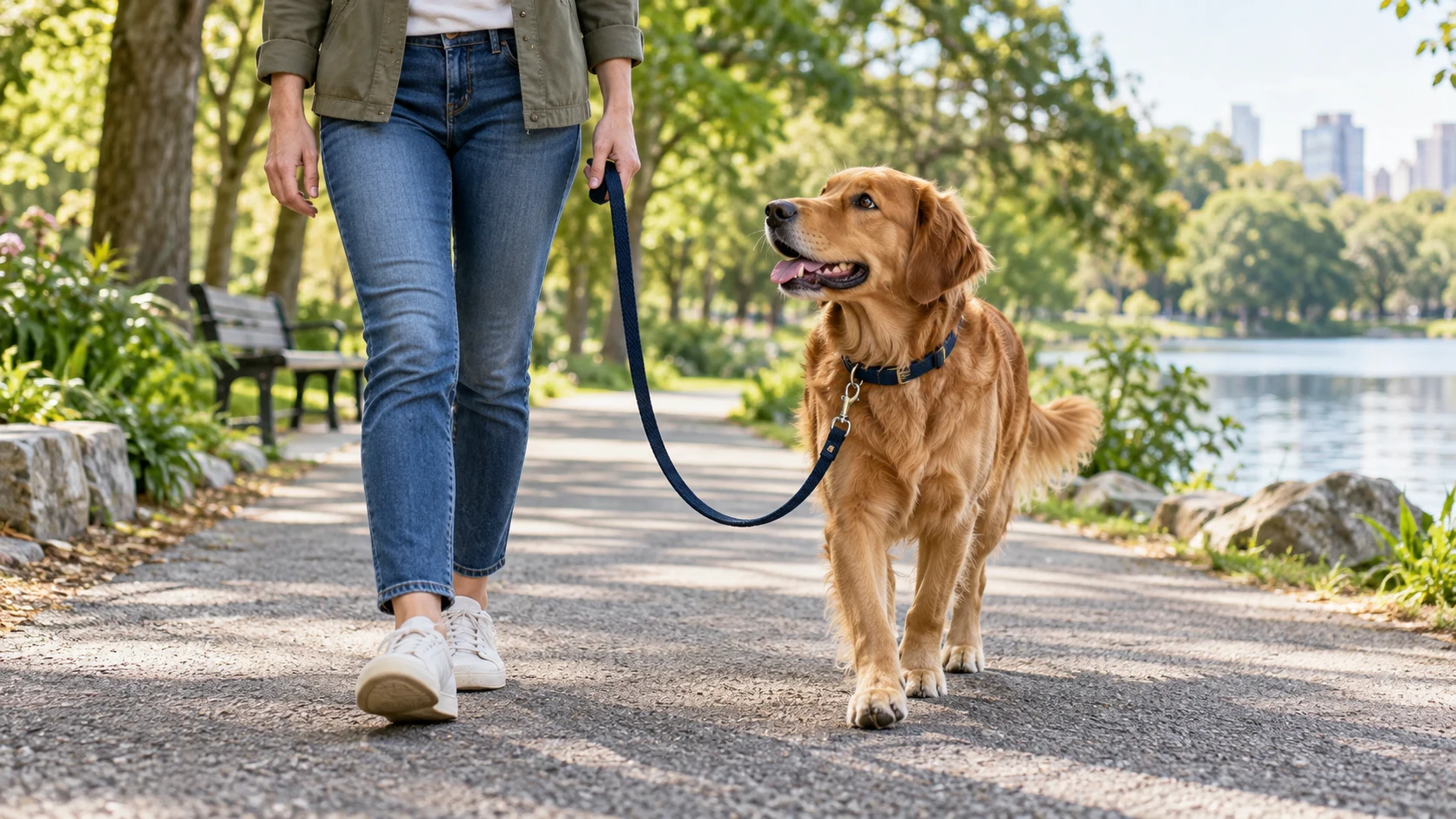
Loose-leash walking applies the reward and progression principles from Dog Training Basics to one practical outcome: the dog can move with you while the leash remains mostly slack. The dog does not need to stare at you or stay in a competition-style heel position.
That distinction matters. A normal walk should still allow appropriate sniffing and exploration. The training goal is not a rigid body position; it is a walking pattern in which pulling is unnecessary to reach the environment.
Why pulling keeps working
Dogs often pull because pulling gets them somewhere: toward a smell, a person, another dog, a patch of grass, or simply farther down the path. If tight-leash movement repeatedly succeeds, the environment itself can reinforce the pulling.
Stopping only after the dog is already at the end of the leash can help, but it is usually not enough by itself. A clearer plan also rewards the dog before tension develops so they learn what position and leash feel are worth repeating.
Set up walks so training is possible
Use a comfortable, secure harness or collar appropriate for the dog and a leash long enough to allow normal movement without being constantly tight. The equipment should keep the dog safe; it should not depend on pain or intimidation to create a loose leash.
Start in a hallway, driveway, quiet sidewalk, or other low-distraction area. If every step outside produces full-force pulling, separate training reps from management walks for a while. A shorter practice in an easy location can teach more than spending the entire daily walk rehearsing pulling and frustration.
Prepare rewards that are easy to deliver while moving. Food is useful, but access to sniffing and forward movement can become powerful real-life rewards too.
Teach loose-leash walking step by step
Step 1: Reward the starting position and the first slack steps
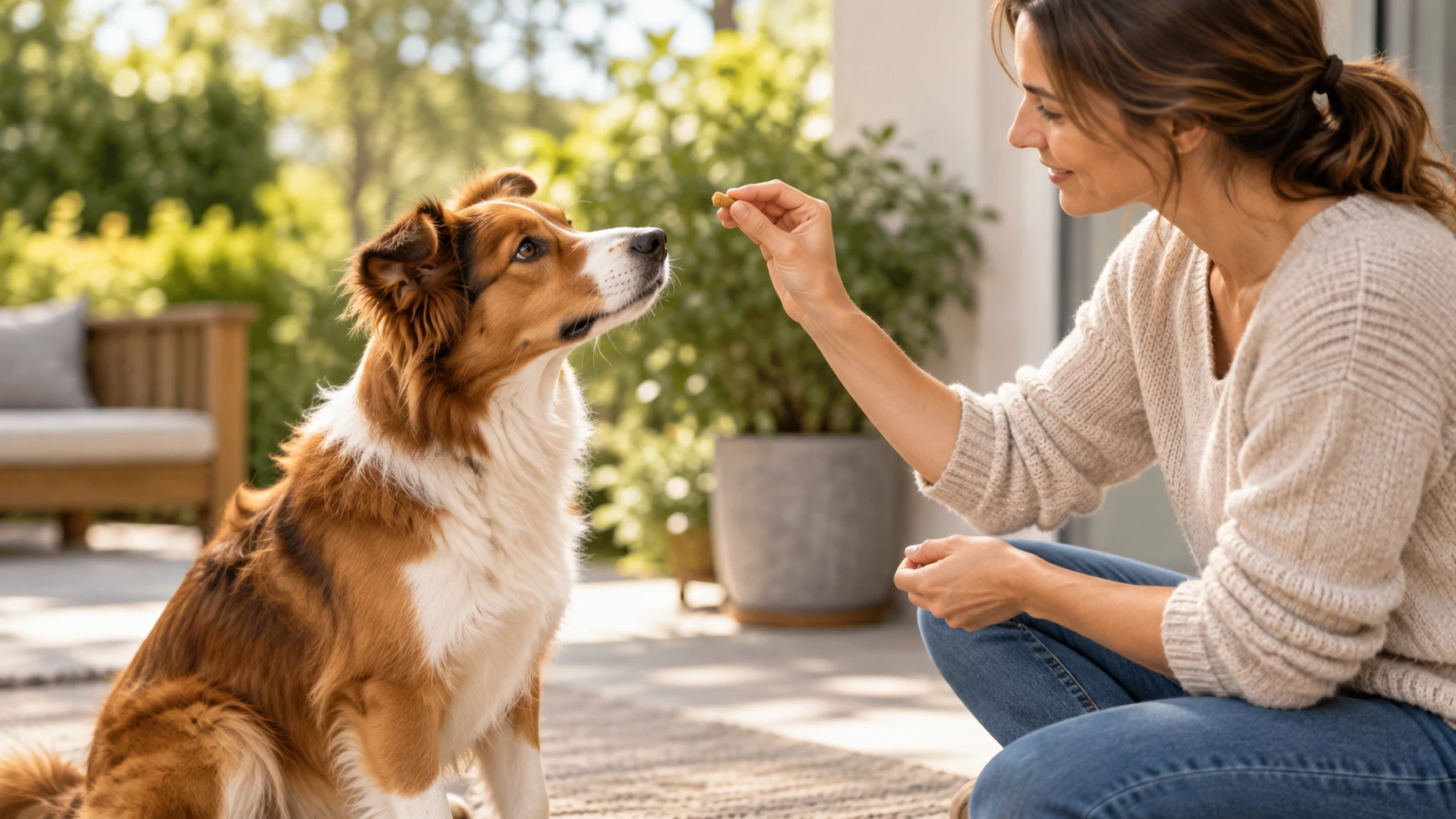
Begin with the dog near you and the leash visibly loose. Mark and reward before you move. Take one or two steps; if the leash stays slack, mark and reward again.
In the first sessions, make successful position obvious and frequent. Do not wait for a long stretch of perfect walking before the dog earns anything.
Step 2: Let slack leash restart movement
Walk forward while the leash is loose. When the leash becomes tight, stop forward progress without jerking the leash. Wait for the dog to create slack by turning, stepping back, or shifting position. Mark that change and move again.
This makes the contingency consistent: pulling does not buy progress; slack restores it.
Step 3: Reinforce before predictable pulling points
If the dog always surges at the gate, toward a tree, or when leaving the driveway, do not wait for the predictable failure. Reward several slack steps as you approach the difficult point. Increase distance if necessary.
Good leash training is proactive. The more often you can reinforce a useful pattern before tension appears, the less of the walk is spent stopping after mistakes.
Step 4: Use turns to keep the dog engaged with your movement
In an easy area, change direction before the dog hits the end of the leash. Mark when the dog notices and follows. Keep turns smooth rather than using them to snap the dog off balance.
This teaches that your path matters and gives you another option besides standing still every time the dog reaches the end of the leash.
Step 5: Use sniffing as a reward, not the enemy of training
Choose a tree, grass verge, or other safe sniffing spot. Walk toward it on a slack leash, then release the dog with a phrase such as “go sniff.” If the leash tightens, pause or move away slightly and try again.
This solves a common conflict: the dog learns that checking in and walking with slack can be the fastest route to the thing they wanted. Sniffing does not need to be removed from the walk for leash manners to improve.
Step 6: Increase difficulty in small layers
Move from indoor or quiet practice to a calm street, then to locations with more movement or scent. Treat every new location as harder. Shorten the required stretch of loose walking and increase reinforcement again.
If the dog cannot eat, orient toward you, or produce slack for more than a moment, the environment is probably too difficult for productive training. Create more distance or choose a quieter route.
Decide what to change when pulling returns
| Problem | What it usually tells you | Next change |
|---|
| Pulling begins as soon as you step outside | The setting is too difficult | Start somewhere quieter |
| The dog walks well only while food is visible | Food is functioning as a lure | Hide visible food |
| The dog pulls hardest toward smells | Sniffing is highly valuable | Reward with sniffing |
| Stopping makes the dog more frustrated | Feedback arrives too late | Reward before tension |
| The dog can walk with you until another dog appears | Attention breaks first | Increase distance first |
The aim is to identify the bottleneck, not choose one correction and apply it harder.
Common mistakes that slow progress
Expecting a full walk too soon. Learning twenty good steps in a quiet area can be more useful than practicing pulling for thirty minutes in a busy environment.
Reinforcing only after pulling stops. That can leave the dog unsure what the preferred walking pattern is. Reinforce slack proactively as well.
Making sniffing disappear. If the environment is what the dog wants, controlled access to it can strengthen the behavior you want rather than competing with it.
Confusing loose leash with heel. Everyday leash manners allow more freedom. Formal heelwork is a separate task with tighter position criteria.
When ordinary leash training is not enough
Pulling caused by excitement is different from barking, lunging, freezing, panic, or aggressive behavior around people or dogs. Those problems need their own assessment and may require a larger behavior plan rather than a stricter loose-leash exercise.
If walking behavior changes suddenly, the dog appears painful, or equipment contact causes discomfort, address the physical concern before treating it as a training failure.