Quick answer
Teach “stay” as a behavior with a clear beginning and end: the dog holds a chosen position until you return or give a release cue. Begin beside the dog for only a moment, reward while they are still in position, then release. Build duration, distance, and distraction separately before combining them. If the dog repeatedly breaks position, make the exercise easier instead of repeating the cue more forcefully. A clear release word is part of the skill, not an optional extra.
Decide whether you mean “stay” or “wait”
Stay uses the same criteria and progression system described in Dog Training Basics, but it should have a precise outcome. For this guide, stay means: hold the chosen position until the handler returns or releases you.
“Wait” can be a different skill: pause temporarily until the next instruction, without necessarily holding the exact body position. That distinction is useful at doors or gates, where the real need may be “do not move forward yet” rather than “freeze in this sit until I return.”
Choose one meaning for each cue in your household and use it consistently.
Teach the release before adding real distance
Pick a release word such as “free,” “break,” or another word you can use consistently. With the dog in a familiar position, reward, say the release word, and encourage movement. Repeat until the word clearly ends the behavior.
A release cue prevents the dog from having to guess how long “stay” lasts. During early training, reward before the release so the reinforcement belongs to holding position rather than to getting up.
Set up the first session
Use a position the dog already knows comfortably, such as sit or down. Start in a familiar place with very little movement around you. Have rewards ready, but do not hold food in front of the dog as a continuous lure.
If the starting sit or down is unstable, strengthen that behavior first. Stay should add duration to a known position, not compensate for a position the dog cannot yet maintain.
Teach “stay” step by step
Step 1: Reinforce a moment of stillness
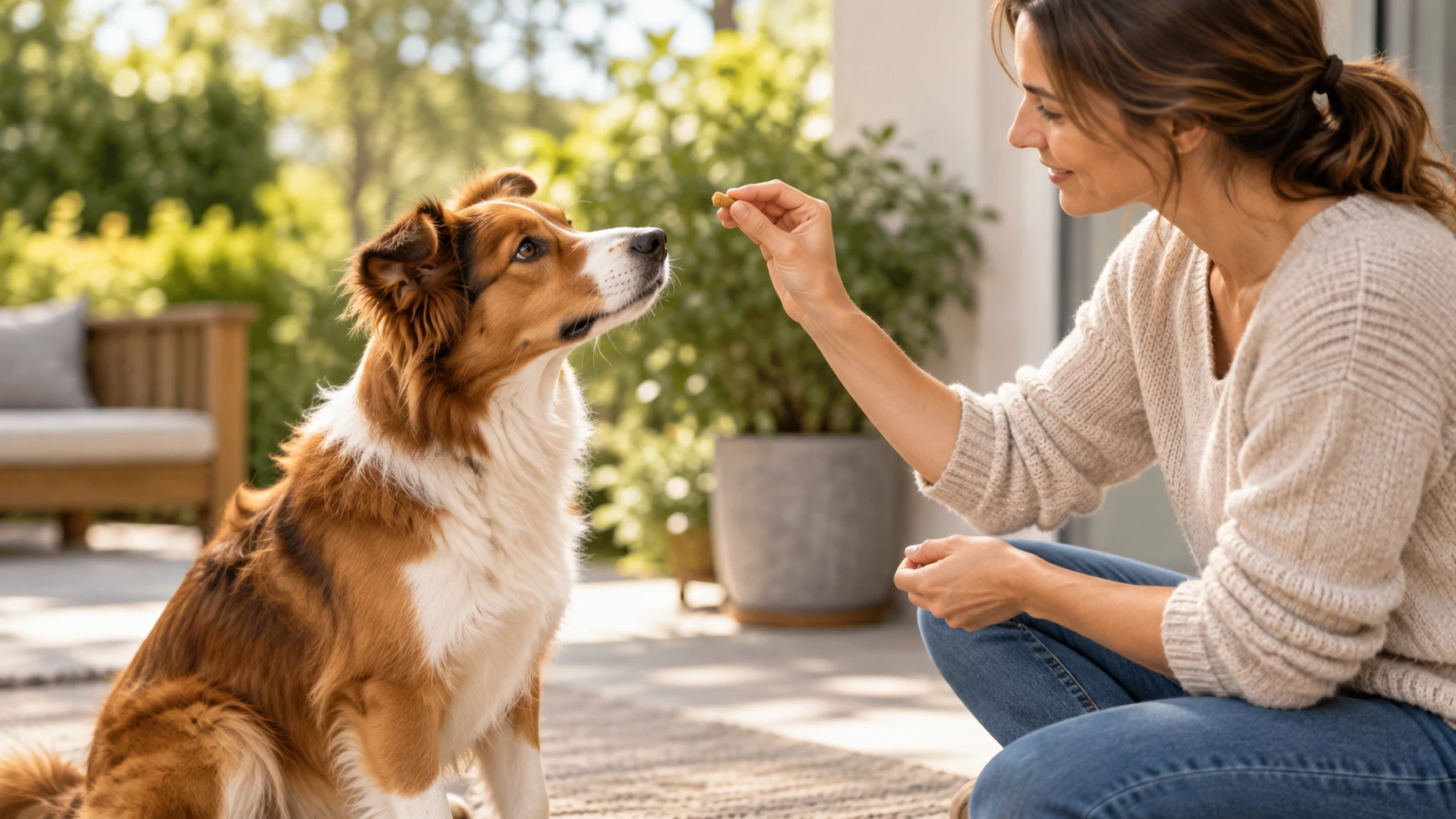
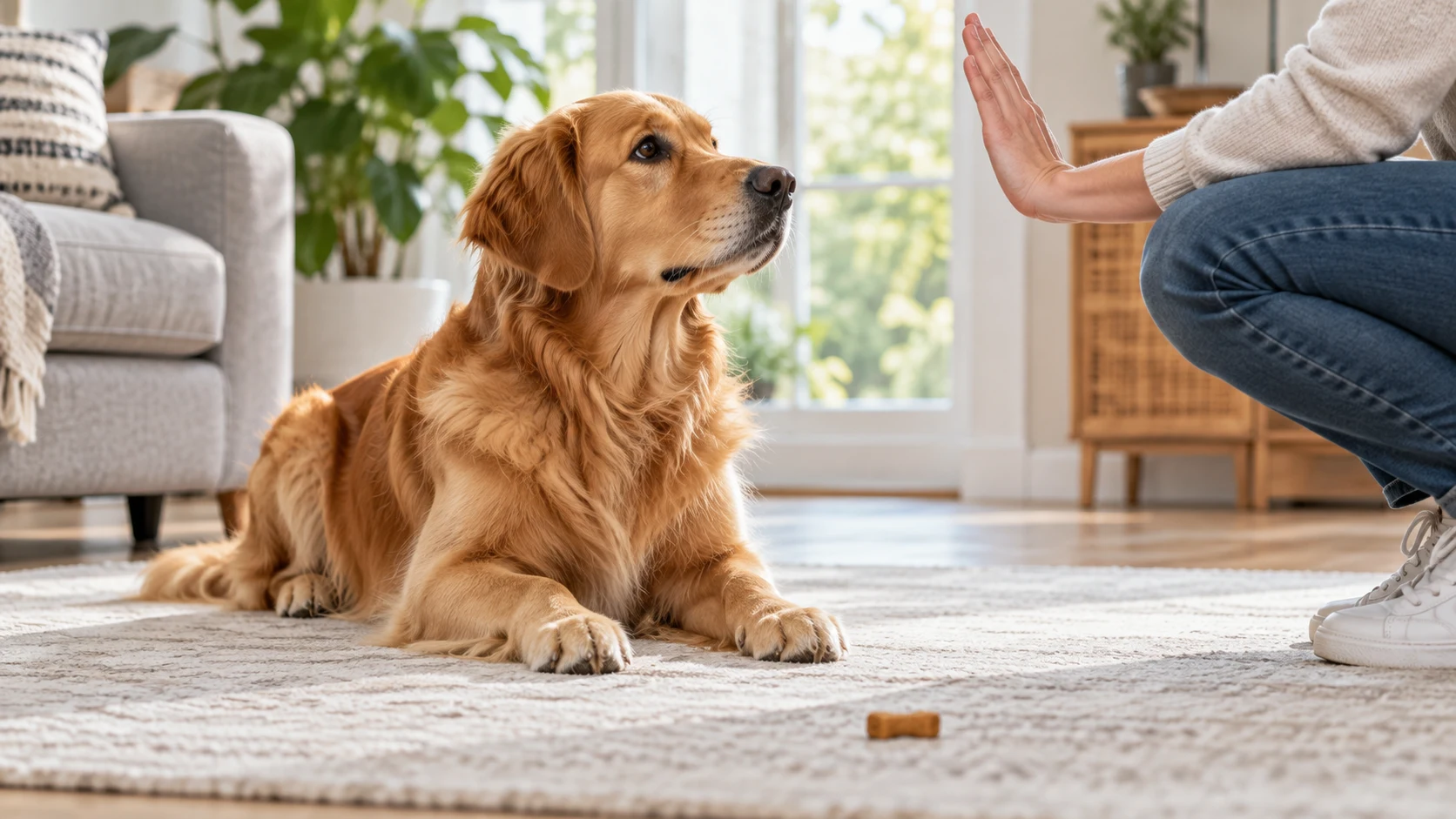
Ask for the starting position. Pause for a moment, mark while the dog is still there, reward in position, then release.
Repeat with easy variation rather than always making the next repetition longer. The dog should learn that staying in place is what earns reinforcement.
Step 2: Build duration while you remain close
Increase time in small amounts while you stay beside the dog. Reward before the dog decides to move. Mix easier repetitions among harder ones so success stays high.
When the dog breaks, shorten the next repetition. Do not use the break as a reason to scold or physically replace the dog more forcefully.
Step 3: Add the stay cue
Once the dog is predictably holding position for a short period, say “stay” once at the start. Keep your body movement minimal at first.
Avoid repeating “stay, stay, stay” as you move. The single cue should remain active until the release.
Step 4: Add very small amounts of distance
Reduce duration again and shift your weight away, take half a step, or take one full step. Return to the dog, mark and reward in position, then release.
Increase distance only while the dog can remain relaxed and still. A bigger step away is a new difficulty, so other variables should temporarily become easier.
Step 5: Add controlled distractions separately
Return to close distance and short duration. Add one mild distraction: move an arm, place an object down, take a side step, or have a person move at a distance.
If the dog is more interested in the distraction than the stay, reduce its intensity or create more space. For dogs that generally struggle to reorient around activity, build focus around distractions separately rather than turning every stay into an attention battle.
Step 6: Combine duration, distance, and distraction conservatively
Only combine variables after each one is working on its own. When one becomes harder, make the others easier. A dog who can stay for thirty seconds beside you in the living room may need only a few seconds when you step away in a new park.
Treat a new location as a harder version even if the physical distance and time are unchanged.
Use a progression matrix instead of guessing
| If you increase… | Keep these easier | Example |
|---|
| Duration | Distance and distraction | Same quiet room |
| Distance | Duration and distraction | One step away |
| Distraction | Duration and distance | Distant moving person |
| Location difficulty | All three | Short, close, easy |
This approach makes failures easier to diagnose because you know which variable changed.
Worked example: from a living-room stay to a park stay
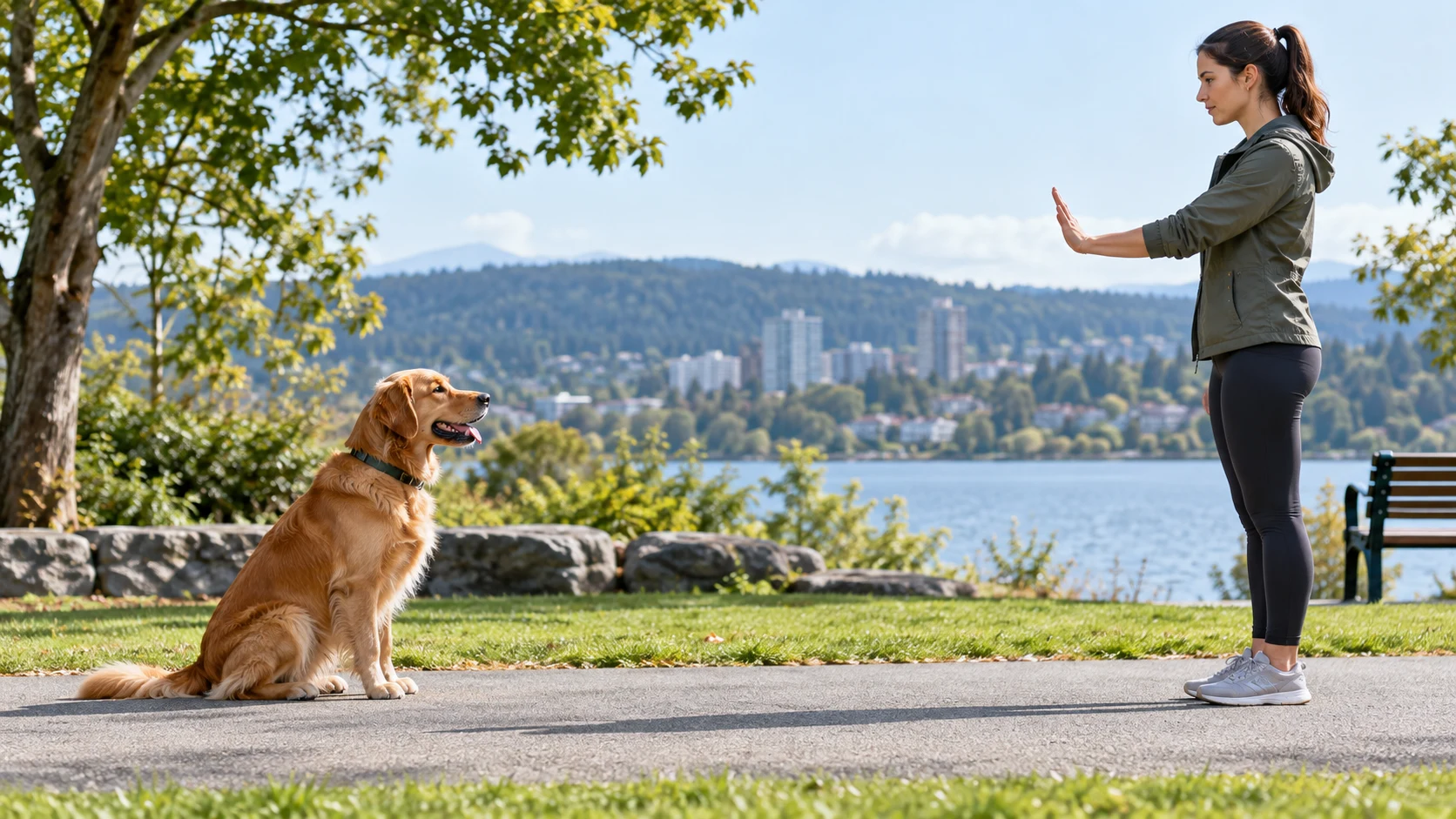
A dog can hold a down-stay for several seconds while the handler stands beside them. The handler adds one step of distance, returns, rewards in position, and releases. Once that is easy, the handler increases distance gradually while keeping duration short.
At a quiet park, the team does not start at the best living-room performance. They return to a brief stay with the handler close. Only after the dog is relaxed and successful do they rebuild distance and duration in the new environment.
The example shows why “reliable” is contextual. A new place changes the task even when the cue is the same.
Troubleshoot the variable that broke the stay
| What happens | Likely issue | Next adjustment |
|---|
| The dog gets up as soon as you step away | Distance increased too quickly | Reduce distance |
| The dog holds position but breaks before release | Duration is too long | Shorten the hold |
| The dog follows you in new places | Context changed too much | Reset in context |
| The dog breaks when another dog or person moves | Distraction is too intense | Add more distance |
| The dog anticipates the release | The pattern is too predictable | Vary easy durations |
When “wait” is the better behavior
Use a separate temporary-pause cue when exact position does not matter and the dog only needs to hold back until the next instruction. Doorways are a common example: “wait” can mean do not cross the threshold yet, while “stay” can retain the stricter meaning of holding a position until release.
Clear criteria are more useful than arguing about which English word is correct. The important point is that each cue predicts one consistent job for the dog.