Quick answer
To train a dog to come when called, build the behavior where success is easy before you test it outdoors. Use one recall cue, reward the complete return to your body, and make close handling part of the reward routine. Increase distance and distractions gradually. Outside an enclosed area, use a long line on a well-fitted harness while the recall is still developing. Do not repeatedly call a dog who is unlikely to respond or make recall predict that all fun immediately ends.
Define a finished recall before you train it
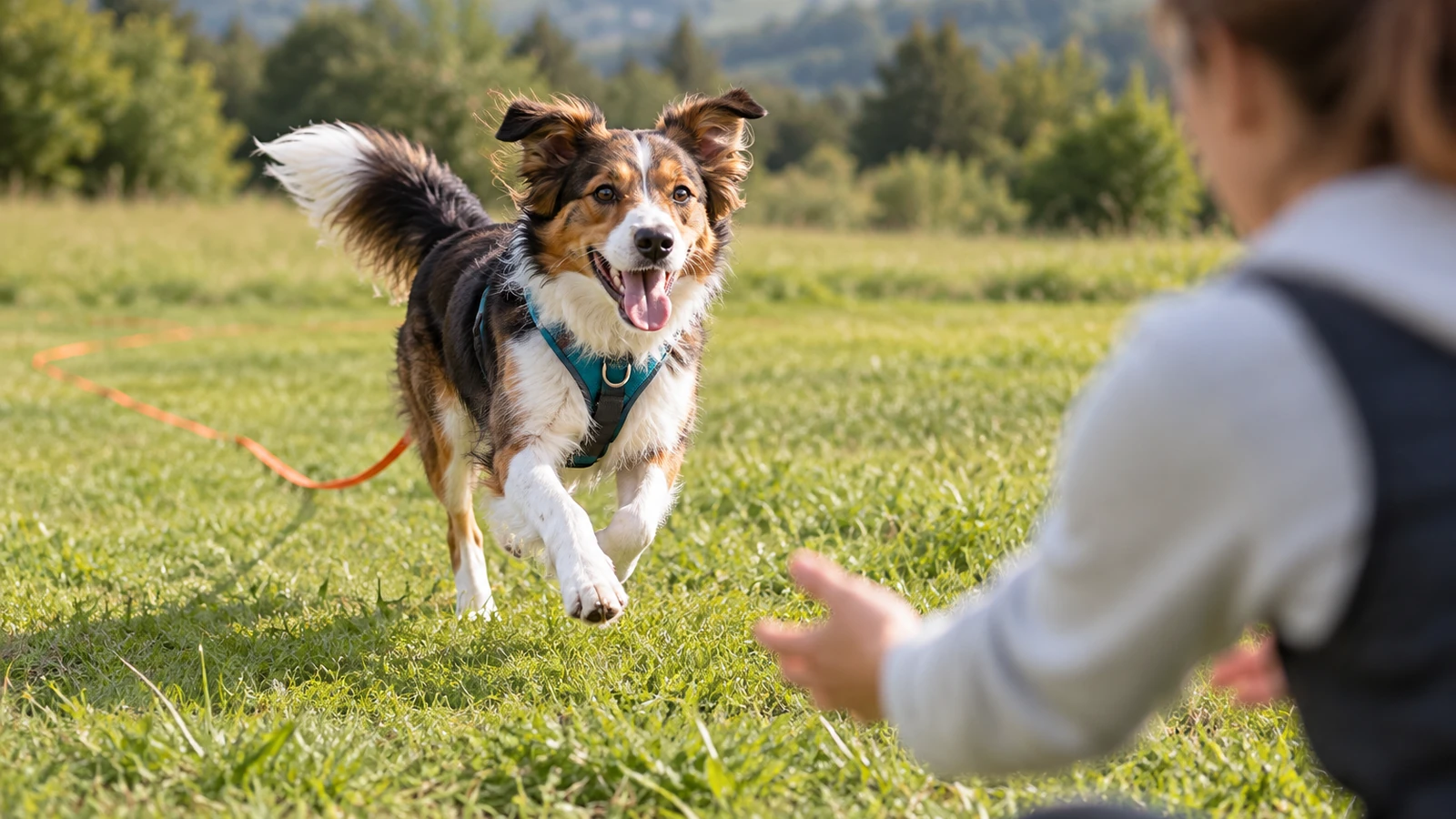
Recall uses the same reward, marker, cue, and progression system explained in Dog Training Basics, but the finished behavior is specific: hear the cue → turn away from the current activity → travel all the way back → finish close enough to be handled or released again.
A head turn is not a complete recall. Neither is running toward you and veering away at the last second. Decide what the finish looks like so you can reinforce the whole chain rather than only the first part.
Choose one cue such as “come” or “here.” If an old cue has been repeated for months without a reliable response, a fresh cue can be easier to rebuild because it does not already predict that responding is optional.
Set up recall practice safely
Start in a quiet room, hallway, fenced yard, or other controlled space. Prepare rewards the dog values in that environment. For outdoor practice outside a secure enclosure, attach a long line to a harness and keep enough slack that the dog is choosing to return.
The line is a safety system, not a way to reel the dog toward you. If you have to pull the dog in, that repetition did not teach the recall you want.
Keep early sessions brief and stop while the dog still wants another repetition. Recall should feel like an opportunity worth taking, not a drill that continues after attention has gone.
Teach recall in six stages
Step 1: Make moving toward you easy and rewarding
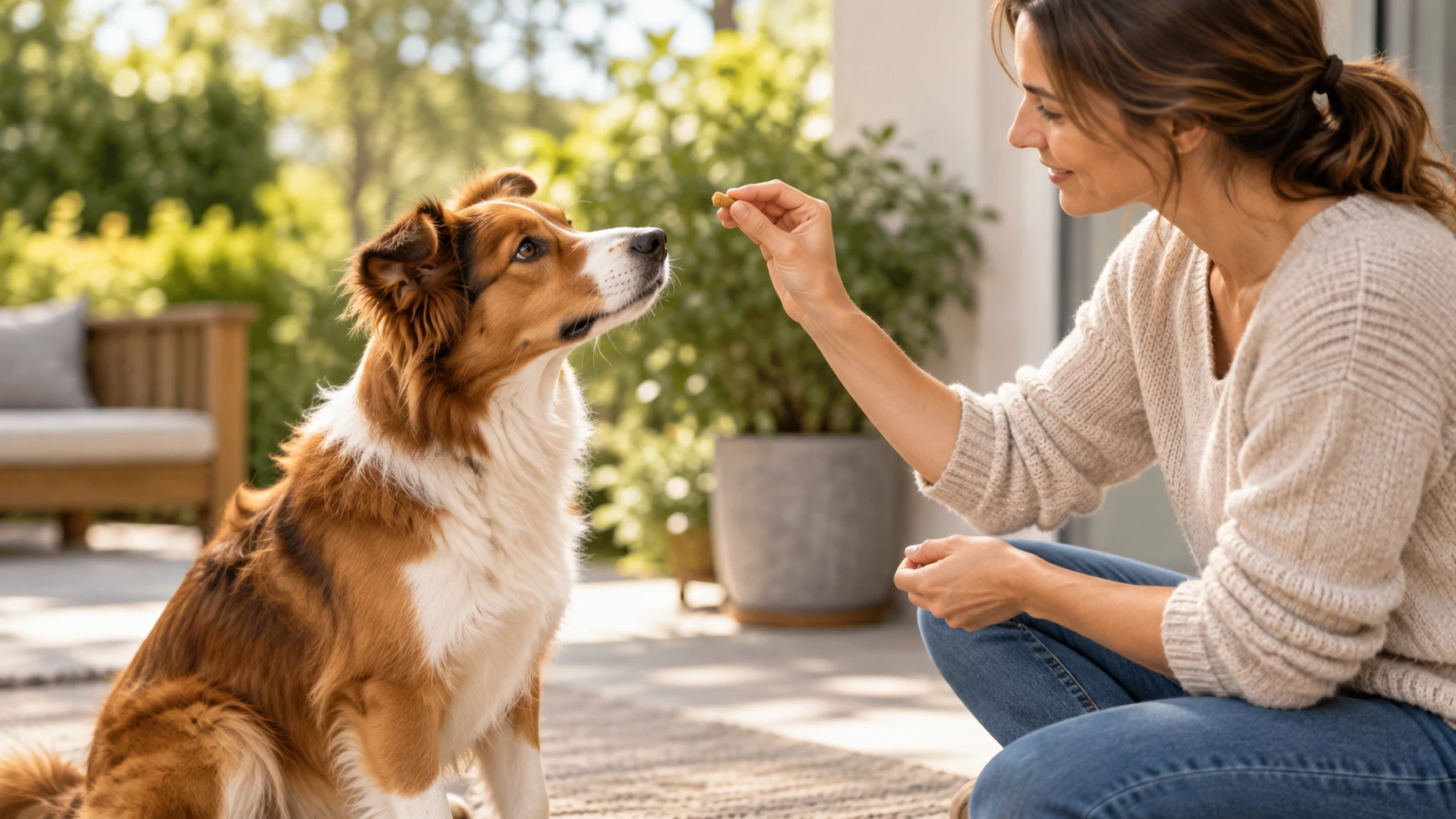
Stand only a few feet away. Wait for a moment when the dog can respond, say the cue once, and move backward a step or two to invite movement toward you. Mark the committed turn or movement, then reward at your body when the dog arrives.
Avoid calling when the dog is deeply engaged with something they cannot yet leave. Early practice should build a strong response history, not measure how difficult a distraction the dog can ignore.
Step 2: Teach the finish, not just the approach
Feed at your legs or briefly play close to your body. Add gentle handling separately: touch the harness or collar, reward, then release. Build from a light touch to the kind of calm hold you may need before clipping on a leash.
If the dog slows or dodges when your hand reaches out, make the handling easier. Grabbing suddenly can make the final step of recall less attractive even when the run back is strong.
Step 3: Add distance before you add major distractions
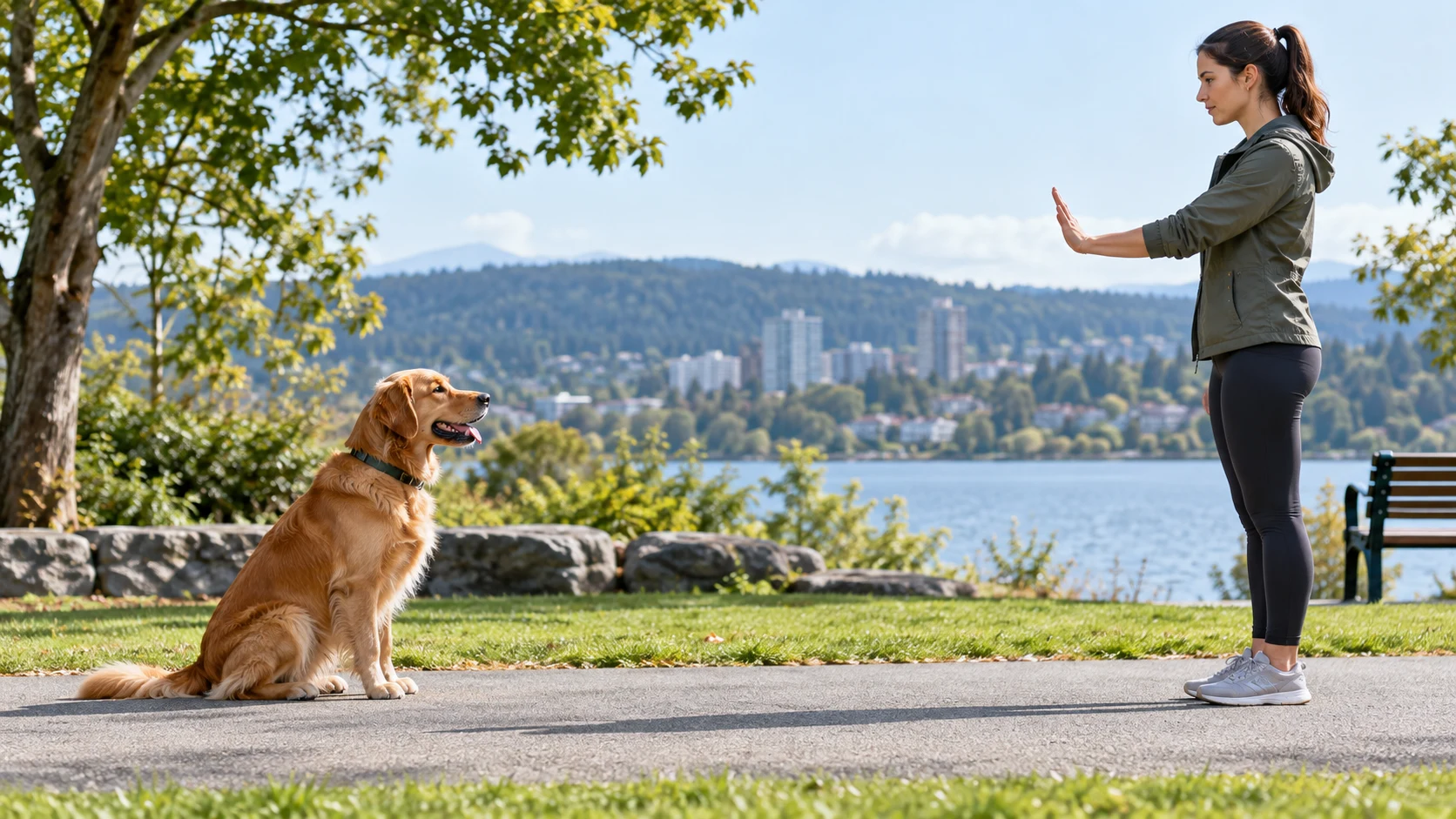
Increase distance in the same easy environment. Move from a few feet to farther across the room or yard only while the dog is turning promptly and completing the finish.
When response speed drops or the dog stops short, reduce the distance. The useful criterion is not a fixed number of feet; it is whether the dog can still perform the full chain confidently at the new distance.
Step 4: Take the skill outside on a long line
Begin in a quiet outdoor space. Let the dog sniff, wait for a moment when they are not fully absorbed, give the cue once, and reward the full return generously.
Keep the line from becoming a constant physical prompt. If the dog ignores the cue, prevent unsafe movement with the line if necessary, then make the next repetition easier by reducing distance, waiting for a better moment, or improving the reward.
Step 5: Add controlled distractions one at a time
Start with distractions you can place far away or keep still. A toy on the ground at a distance is easier than a running dog. A quiet field is easier than a busy trailhead.
If the dog can notice the distraction and still reorient, you can gradually make it more difficult. If attention is the weak link, work separately on focus around distractions rather than repeatedly testing recall at a level where the dog cannot disengage.
Step 6: Make returning compatible with fun continuing
Do not make every successful recall predict “leash on, activity over.” Sometimes call the dog, reward, and release them back to safe sniffing or play. That preserves the value of returning even when the environment is rewarding.
Continue reinforcing recall after it is learned. The visible food lure can disappear, but a behavior with major safety value should continue to produce worthwhile outcomes, especially around harder distractions.
Use these criteria before you make recall harder
Progress when the dog is repeatedly completing the whole chain at the current level: prompt orientation, direct travel back, close finish, and comfortable handling. A single impressive response is not enough reason to double the distance or add a much harder distraction.
When you change location, assume the behavior may need an easier starting point. Reliability in one field does not guarantee reliability near wildlife, other dogs, traffic, or unfamiliar people.
Troubleshoot the part of recall that is failing
| What happens | Likely problem | Best next adjustment |
|---|
| The dog looks at you but does not move | The distraction is winning | Lower distraction first |
| The dog runs back but stops out of reach | The close finish is weak | Train close finish |
| The dog responds indoors but not outside | The context jump is too large | Rebuild outdoors gradually |
| The dog comes slowly after several cues | The cue is losing clarity | Cue once only |
| The dog returns, then immediately avoids you | Coming close predicts loss | Reward, then release |
Do not solve these problems by making the cue louder or more threatening. The goal is to improve the learning conditions and the value of completing the recall.
Off-leash freedom is a management decision, not a training milestone
No recall is a guarantee against every distraction. Use secure areas and follow local leash rules. Do not remove the long line simply because the dog has succeeded several times in an easy field.
A reasonable readiness check is whether the dog can complete the recall promptly around the kinds of distractions present in that specific environment, while you still have a safe fallback. Wildlife, roads, unfamiliar dogs, and other high-consequence situations justify more conservative management.
When to get professional help
Ordinary recall practice is not the right tool for fear, aggression, predatory behavior that creates serious safety risk, or a dog who cannot function around common triggers. Seek qualified, reward-based professional help when the consequences of failure are high or the dog is repeatedly over threshold despite increased distance and easier setups.