Set up the toilet area before the first outing
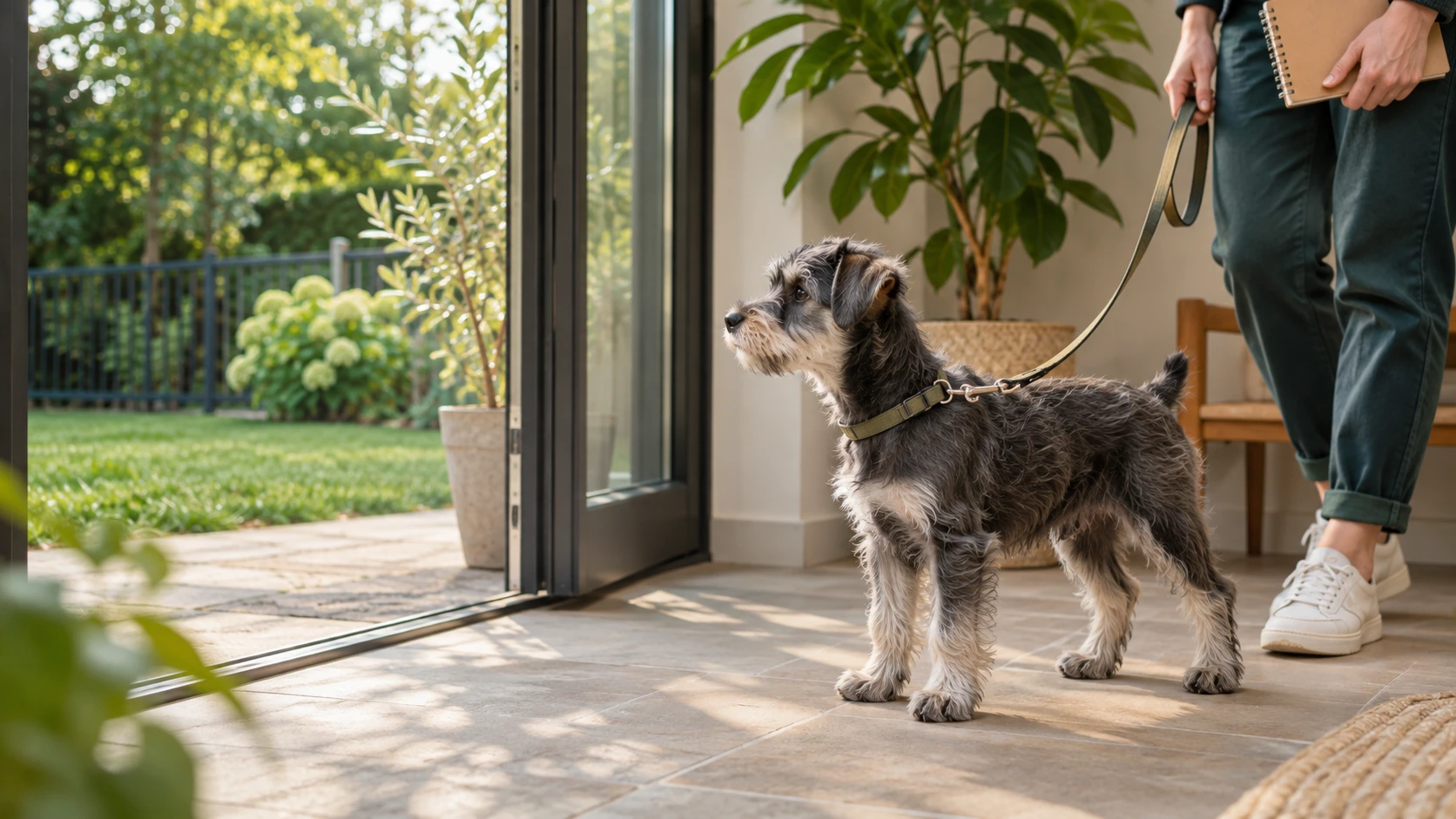
Begin on your puppy’s first day at home. Choose a place that is easy to reach quickly and, if possible, use the same exit and toilet area each time. The immediate goal is not to make the puppy wait; it is to give them repeated opportunities to learn where to go.
Prepare four things:
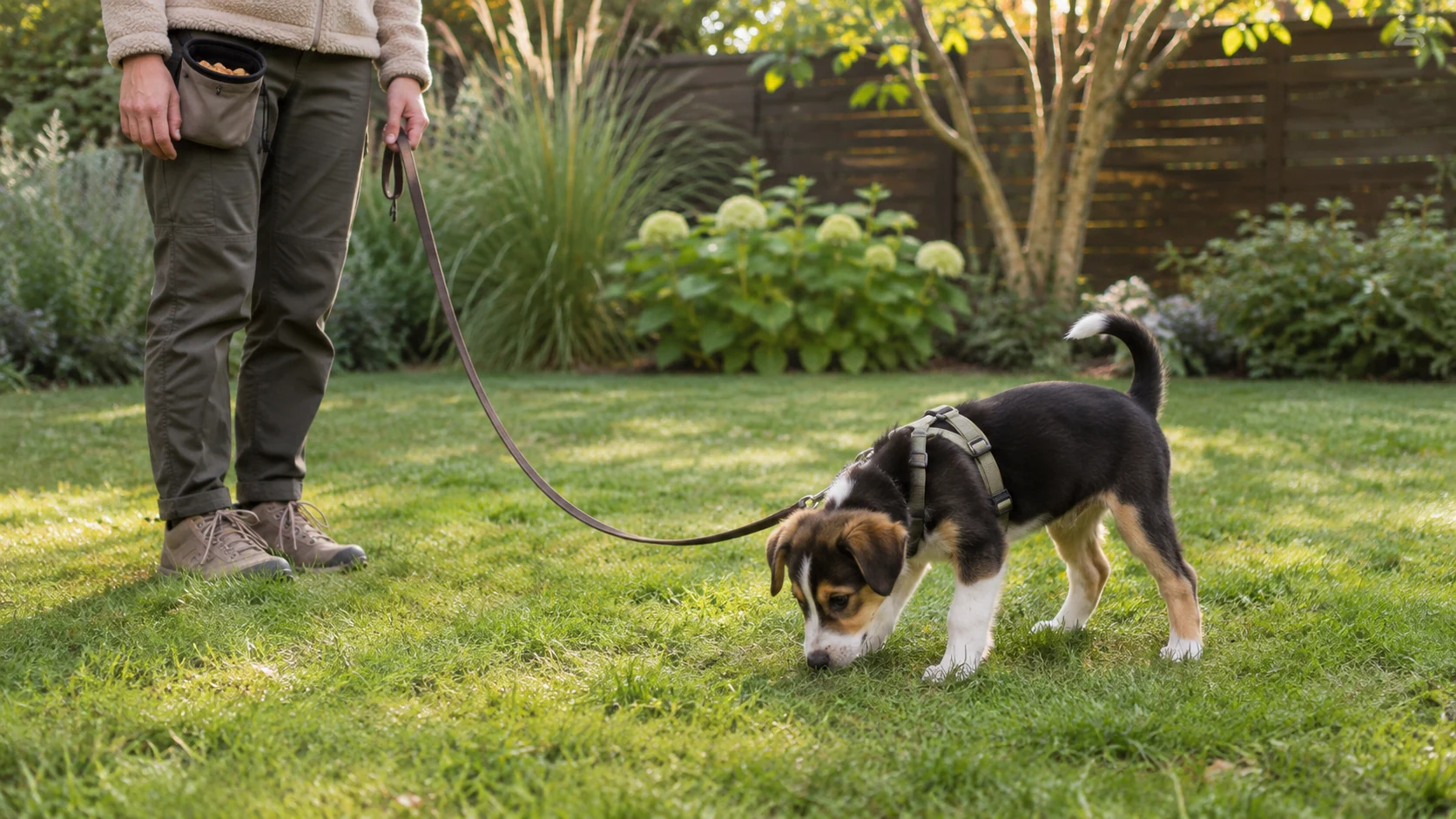
- A suitable toilet area. A quiet patch of grass or another appropriate surface is easier to use consistently than a different destination on every outing. For a puppy whose vaccinations are incomplete, ask your veterinarian which outdoor locations are safe in your area; avoid using busy dog-toileting spots as the default training location.
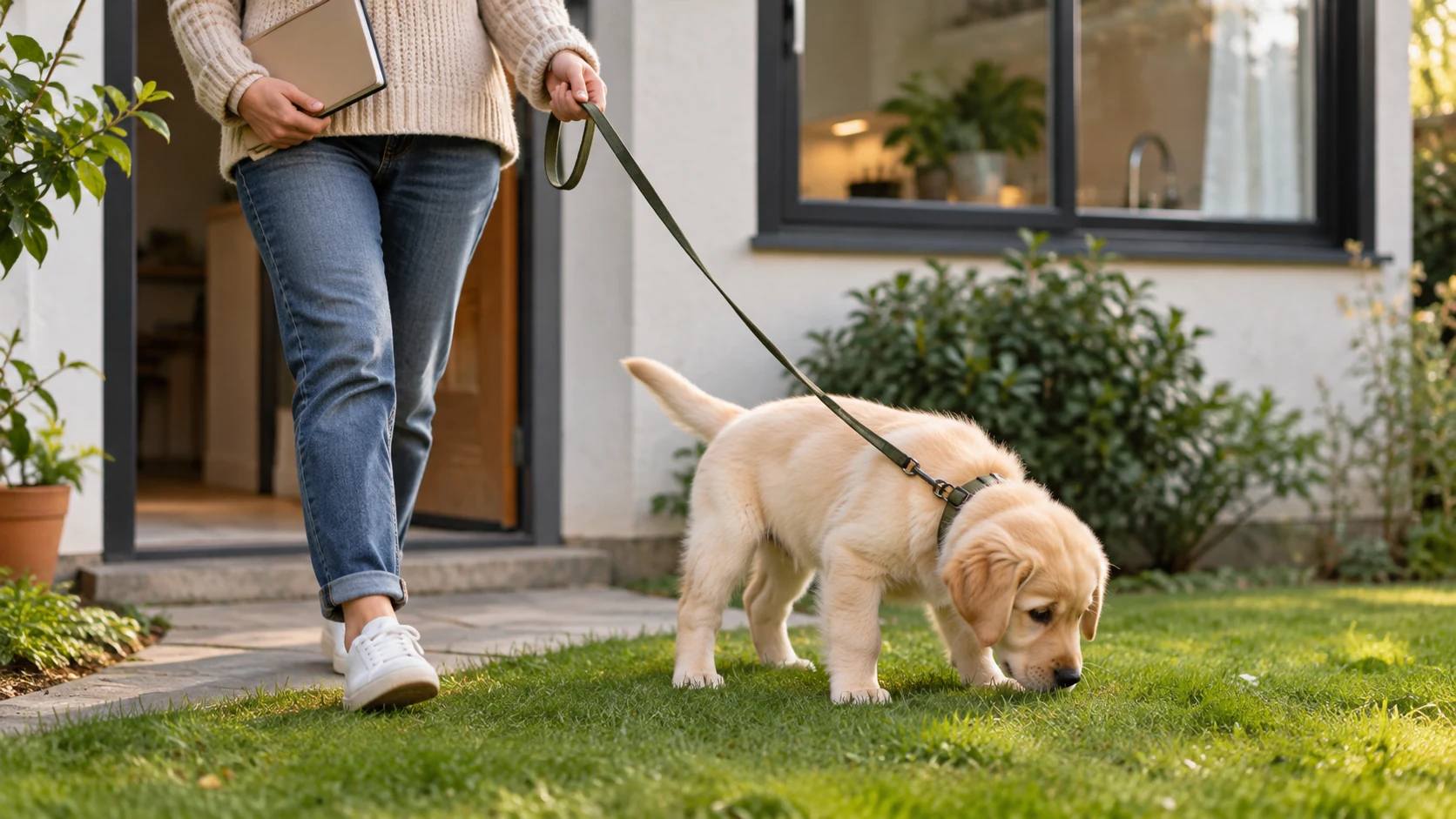
- A leash or secure enclosure. Stay with your puppy so you can see whether they actually eliminate. A puppy left to explore the yard alone may return without having gone.
- A reward ready to deliver. Keep small, appealing treats in a pocket or pouch before you open the door. You will need one at the toilet area, not in the kitchen afterward.
- A manageable indoor space. Use direct supervision, a baby gate or an appropriately prepared puppy pen when you cannot follow every movement. A crate may be useful if your puppy has learned to feel comfortable in it, but it is not required and must never be used as punishment or as a substitute for needed toilet breaks.
If outdoor access is temporarily impractical or unsafe, discuss an appropriate indoor toilet location with your veterinarian or qualified trainer. Be consistent about the chosen location and surface rather than expecting the puppy to understand changing rules without further training.
How to potty train your puppy, step by step
1. Offer a toilet break before the puppy has an accident
Take your puppy to the chosen area immediately after waking from sleep, after meals or substantial drinking, and after active play. Offer additional opportunities while the puppy is awake; waiting for a signal alone is not enough for a young dog. Some puppies also need an overnight break. The exact frequency depends on the puppy and what you observe, not a fixed promise based on age.
When your puppy begins sniffing one spot repeatedly, circling, wandering away from an activity or suddenly becoming restless, treat it as a possible signal. Calmly guide them to the toilet area. These signs are helpful clues, not a requirement: a puppy may squat without much warning.
2. Make the outing about toileting first
Lead your puppy to the usual spot and give them room to sniff within the safe area. Keep your voice and movements calm. Avoid starting a game or walking so far that the puppy becomes distracted before they have a chance to go.
Wait for a few minutes while you watch. You need to see the puppy pee or poop: reaching the garden does not, by itself, count as a successful toilet break. If nothing happens after about five minutes, return indoors together and use the close-supervision approach in Step 4.
As soon as your puppy finishes peeing or pooping, praise calmly and offer a small treat while you are still beside the toilet area. Do not wait until you have walked through the door. This timing connects the reward to toileting in that place rather than to returning indoors.
Once toileting is finished, allow a little suitable sniffing, walking or play when circumstances permit. Outdoor time need not end the instant the puppy eliminates. If you want a verbal cue such as “go potty,” say it softly as the puppy is beginning to eliminate, then reward when they finish. Only try using it to invite toileting after the association has become familiar; repeating it insistently before the puppy understands it adds little.
This is the same immediate, observable reinforcement principle used in reward-based dog training. Continue rewarding successful outings while the habit is developing; a cue does not replace a reward.
4. If nothing happens, supervise and try again
A puppy who does not go outside may still need to go shortly afterward. Bring them back inside, keep them in the same room and watch them directly instead of allowing unrestricted access to the house. If you must turn your attention elsewhere, use an appropriate, comfortable supervised or safely managed area for a short interval; do not expect a crate or pen to make the need disappear.
At the first sign of circling, persistent sniffing or an attempt to squat, return promptly to the same toilet spot. Repeat the reward in Step 3 if the puppy eliminates there. If you repeatedly miss the moment, arrange the next opportunity sooner and reduce distractions on the outing rather than staying outside indefinitely.
5. Respond to accidents without scolding
If you notice an accident beginning, calmly interrupt only if you can do so without frightening the puppy and guide them to the toilet area. Reward if they finish there. If the accident is already over, there is nothing to correct in that moment: clean it up and consider what happened just beforehand.
Use an enzymatic cleaner suitable for the surface, following its product instructions. Remove access to a repeatedly soiled area while you rebuild supervision. Never punish, shout at, strike or rub a puppy’s nose in an accident. Punishment can make a puppy reluctant to toilet in front of you, including outside, and does not teach the correct location.
6. Increase freedom based on what you actually observe
Begin with a small area where someone can directly supervise the puppy. After repeated successful outings and a reliable pattern in that area, allow access to one additional supervised space, while keeping toilet opportunities available. Do not move from one room to free access to the entire house because of a single accident-free day.
Watch what changes. If accidents start in the new area, reduce the space or increase supervision again and return to the last arrangement that was working. The useful measure is whether your puppy can use the correct toilet area in the circumstances you are giving them, not whether they have reached a particular age.
Worked example: the outing that produced nothing
Illustrative example, not an observed training result. A puppy wakes from a nap and is taken straight to the usual patch of grass. They sniff but do not urinate during a brief, calm outing. The owner brings them inside, keeps them nearby rather than letting them run behind the sofa, and notices focused floor-sniffing a short time later. They return to the same outdoor spot. This time the puppy urinates, and the owner delivers a treat immediately after they finish.
The important decision happened after the unsuccessful first outing. The owner did not assume that going outside meant the puppy’s bladder was empty. They kept the next opportunity available, observed the puppy and rewarded the successful location. If this pattern repeats, the owner can adjust the timing of future breaks rather than extend every outdoor trip.
How long does puppy potty training take?
There is no reliable deadline that applies to every puppy. A puppy may quickly learn to eliminate when taken to the correct spot but still be unable to wait for the next opportunity, recognize every signal or request access consistently. Age, prior experience, physical development, the environment and the consistency of available breaks all affect how the process unfolds.
Look for a pattern of improvement rather than one perfect day: the puppy uses the designated area when given the chance, accidents become less common without constantly restricting access to a toilet, and the puppy stays successful as you gradually change the supervised environment. Some puppies begin moving toward the exit or giving another recognizable signal, but an absent signal does not mean you should stop offering breaks.
A dry night does not establish daytime reliability. Likewise, a puppy that toilets promptly outdoors when taken there is not necessarily ready to wait through a long absence. Build greater freedom from what the puppy can manage now, and organize suitable care when no one is home.
Choose the next adjustment when training stalls
Use the pattern of the problem to decide what to check. The table identifies the next decision; the detailed method remains in the steps above.
| What you observe | What it changes |
|---|
| The puppy sniffs outdoors but pees soon after coming back | Treat the outing as unsuccessful and use the close-supervision route in Step 4. Check whether the outdoor spot is too distracting. |
| Accidents mostly happen in a room you cannot watch | Reduce access to that room and return to the supervised-space progression in Step 6. |
| The puppy toilets outside but cannot stay dry during a long absence | Arrange an appropriate toilet break or managed toilet area. Do not try to solve an access problem by expecting the puppy to wait longer. |
| The puppy has become reluctant to toilet when someone is nearby | Check whether they have been interrupted or frightened; stop corrections and restore a calm, predictable opportunity with a reward afterward. |
Do not withhold needed drinking water, use punishment, or make a puppy stay in a soiled crate as a way to force progress. If the setup cannot accommodate the breaks the puppy needs, change the care arrangement rather than the puppy’s access to basic needs.
When to stop troubleshooting and get help
A new pattern of accidents after the puppy was previously reliable is not automatically a training failure. Contact a veterinarian if there is sudden change, pain while urinating, blood in the urine, markedly increased drinking or repeated urgent attempts to toilet. Straining with little or no urine passed requires urgent veterinary care. Do not continue repeated training trials while waiting for an inability to urinate to resolve.
If your puppy is fearful of the outdoor area, do not force them to stay there until they eliminate. Choose a quieter, safer opportunity and seek veterinary or qualified reward-based training advice if fear persists. If accidents remain frequent despite a feasible routine, direct supervision and prompt rewards, ask your veterinarian to assess possible physical causes before treating the issue as disobedience.
Plan the next stage
For day-to-day planning, a puppy potty training schedule should connect sleep, meals, play and caregiver handoffs with suitable toilet opportunities; adjust it from the puppy’s actual pattern rather than from a rigid age formula. If accidents return after a period of reliable toileting, a potty training regression check begins by asking what changed in the puppy’s health or environment before repeating or intensifying the routine. Those are distinct next tasks. The foundation remains a suitable location, close observation and timely reward.