
A potty-training schedule tells you when to offer a toilet break; it does not replace teaching your puppy where to go. For the full method, including rewards, missed outings and accidents, see how to potty train a puppy.
Puppies
Puppy Potty Training Schedule: Daytime and Nighttime Routines
Plan toilet breaks around sleep, meals and play, then use a simple record to adjust the routine through the day and overnight.
Quick answer
Build your puppy's potty schedule around waking, meals, drinking, play, naps and bedtime. Add frequent opportunities while the puppy is awake, and take them to the toilet area immediately when you notice possible signals such as circling or persistent sniffing. Record whether each outing produced pee, poop, both or neither. If nothing happens, supervise closely and offer another chance instead of marking the break as successful. Adjust the next day's timing from what actually happened, not from a fixed age-based holding-time formula. Some puppies also need a toilet break overnight.
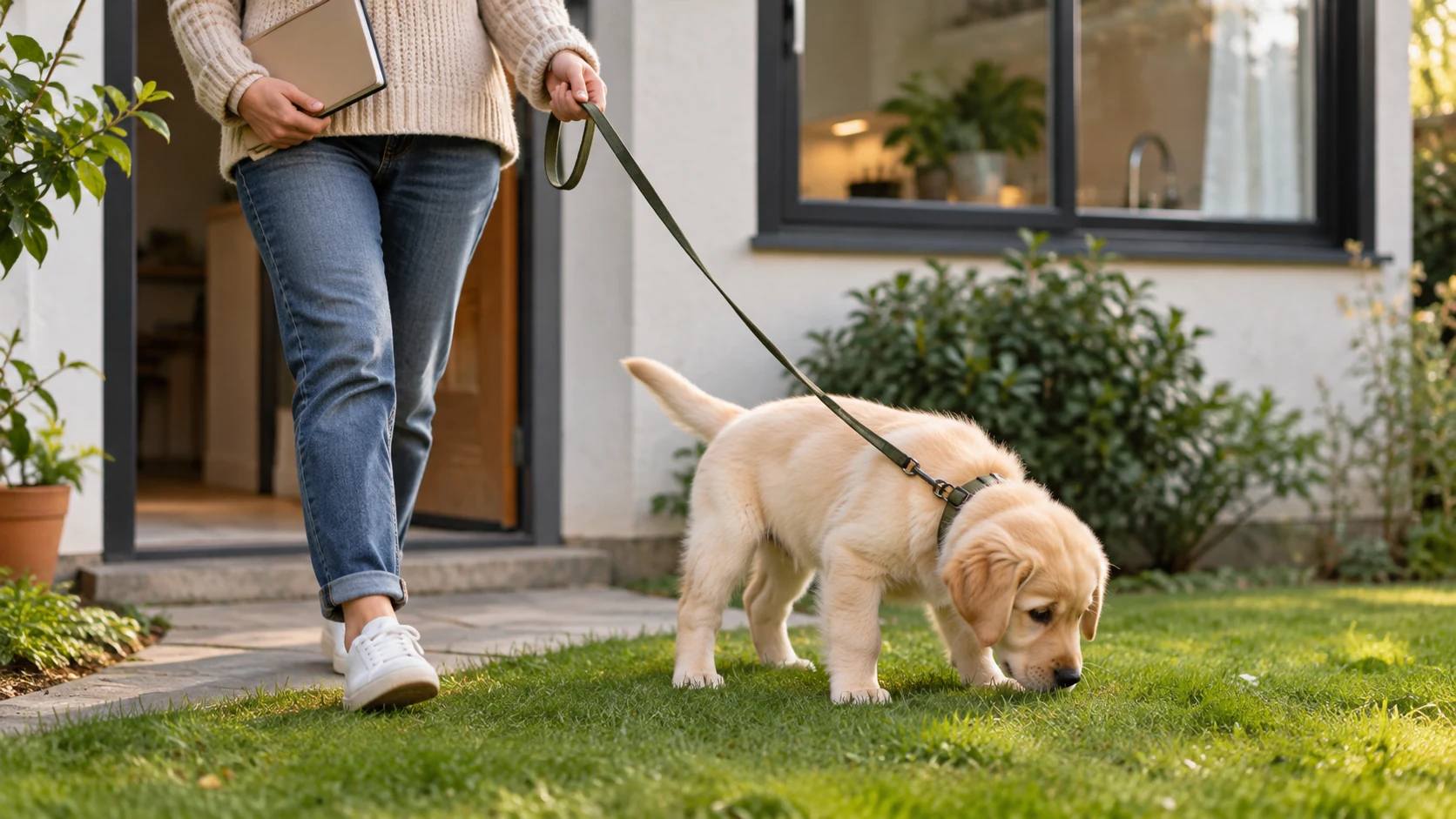
Build a potty schedule around your puppy's day
You need a place your puppy can reach safely, a caregiver who can accompany them, and a simple record. Use the feeding and sleep routine appropriate for your puppy; the aim is to plan toilet opportunities around it, not to change meals or restrict water to make a timetable convenient. If your puppy has not completed their vaccinations, ask your veterinarian which outdoor toileting locations are appropriate in your area.
1. Record the events that make a break likely
Start by writing down when your puppy wakes up, eats, has a substantial drink, plays actively, naps and settles for the night. Mark when you leave home, return and hand care to someone else. These are useful scheduling points because puppies often need to eliminate after waking, eating or playing, and may need additional chances during active periods.
Also note behavior that interrupts the plan: focused floor-sniffing, circling, sudden restlessness or movement toward the usual exit. Do not wait for a signal if a break is already due. Some puppies give little obvious warning before squatting.
Use your puppy's real waking and feeding times. A printed sample that begins at 7 a.m. is not useful if your puppy wakes at 5:30 a.m.
2. Place toilet opportunities around those events
Offer a break promptly after waking, after meals and active play, and before bedtime. Include additional opportunities during the day rather than leaving the puppy to wait from one named event to the next. Following a large drink or during a particularly energetic period, watch more closely and be ready to go sooner.
For a puppy without an established pattern, choose a frequent, manageable starting interval while awake, then shorten it if accidents occur before the next planned trip. Do not use an age-in-months calculation as a guaranteed bladder limit or make the longest possible wait your target. Sleep, activity, individual development and the circumstances of the day all affect the timing.
A break counts as a successful toilet opportunity only when you have actually seen the puppy urinate or defecate in the appropriate place. Reward immediately after they finish, while still at the toilet area. Peeing does not confirm that the puppy has also pooped, and going outside without eliminating does not mean they can safely wait until the next scheduled slot.
3. Decide who will supervise and who will take the puppy out
Put a name beside each planned break, especially if several people share care. The responsible person needs enough time to accompany the puppy, observe the result and record it. A handoff such as "the puppy has been out" is insufficient; the next caregiver needs to know whether the puppy actually went.
Between breaks, keep the puppy in a space where a person can notice a possible toilet signal. If an outing produces nothing, return indoors together, maintain direct supervision and offer another opportunity at the first relevant sign or after a short, closely managed interval. A puppy pen can help manage space, but it cannot replace access to a toilet. Do not leave a puppy confined longer than their needs allow.
4. Check whether the timetable works in your home
Review the day before you rely on the plan. Can someone respond immediately after each nap, including one that ends earlier than expected? Is the toilet area accessible from your apartment? Who covers a work meeting or a trip to the shops? Can somebody respond if the puppy needs to go overnight?
If the answer is no, change the care arrangement. A schedule that assumes a young puppy will wait through an unattended period is not a practical schedule. Arrange a suitable caregiver or, where necessary, an appropriately managed indoor toilet area with a separate resting space. Do not use a crate, withheld water or punishment to make an unworkable interval appear successful.
Worked example: a daytime potty-training routine
The following is an illustrative record for one puppy, not a universal timetable or a prescribed feeding plan. Times show how a caregiver could link normal household events to toilet opportunities. A real puppy may wake, eat, play or need to go at different times; those events take priority over the clock.
| Example time and event | Observed outcome | Caregiver's next decision |
|---|---|---|
| 6:45 a.m. — Puppy wakes | Pees outside | Reward at the toilet spot; record the result. |
| 7:10 a.m. — Breakfast | Poops on the after-meal outing | Record poop separately from the earlier pee. |
| 8:05 a.m. — Active play ends | Pees outside | Continue supervised play or rest. |
| 9:40 a.m. — Wakes from a nap | Goes outside but does neither | Keep the puppy nearby; this was not a successful toilet break. |
| 9:55 a.m. — Starts circling indoors | Pees on the next outing | Reward; log the short gap after the missed opportunity. |
| 12:15 p.m. — Planned midday meal | Poops outside afterward | Record which caregiver saw it. |
| 3:10 p.m. — Wakes from another nap | Pees outside | Resume the afternoon routine; include additional breaks as needed. |
| 6:30 p.m. — Evening activity ends | Pees outside | Keep watching after food, play and drinking. |
| 9:45 p.m. — Last opportunity before bed | Pees outside | Note the last confirmed elimination before sleep. |
This example does not mean that breaks between rows can be skipped. The caretaker would add opportunities whenever the puppy is active, drinks, shows a signal or appears unable to wait. Meal times, sleeping periods and the number of outings must fit the individual puppy.
The most useful observation is the 9:40 a.m. trip. The puppy went outside but did not eliminate; the caregiver kept them under close observation and responded at 9:55 a.m. If the caregiver had logged the first trip simply as "done," the record would have hidden the reason an accident might follow.
Use a simple log to adjust the next day
You do not need a complicated app. A note on paper or a shared phone record is enough if everyone uses the same fields:
- Time and trigger: for example, 9:40 a.m., woke from a nap.
- Toilet opportunity: offered, missed or interrupted; who took the puppy.
- Observed result: pee, poop, both or neither; where it happened.
- Accident or relevant signal: its time and what the puppy was doing just beforehand.
- Next adjustment: the next opportunity to add, move earlier or keep unchanged.
Record what you saw, not what you assume happened. If another caregiver took the puppy into the garden but did not observe elimination, the result is "not confirmed," not "pee."
What an accident changes in tomorrow's schedule
Suppose your puppy regularly pees after lunch but poops indoors a little later. The record shows a confirmed urination, no confirmed bowel movement, and an indoor accident after the puppy returned. The next day, keep the puppy supervised after the initial outing and offer another calm opportunity when their behavior suggests it is needed. Do not assume that one successful pee finished the toilet break.
If an accident repeatedly occurs shortly before a planned break, move that particular opportunity earlier. If a puppy consistently succeeds in comparable circumstances, you can cautiously test a slightly longer gap one interval at a time. Keep the event-based breaks in place and return to the shorter interval if the new gap leads to accidents.
Look for patterns across similar situations rather than reacting to a single dry afternoon. A successful nap-to-toilet routine does not establish how long the same puppy can wait during active play, and a dry night does not establish daytime readiness.
Plan nighttime potty breaks without restricting water
Offer a calm toilet opportunity immediately before the puppy settles for the night. Keep the route to the designated toilet area safe and easy to use in low light. Some puppies will need to go out during the night; others may sleep longer, and needs can change as they develop.
Keep the puppy close enough that the responsible caregiver can notice restlessness or a request to go out. If the puppy wakes and may need to eliminate, accompany them to the usual location, allow a quiet opportunity, reward after successful elimination and return to sleep without turning it into a play session. Record the time and outcome. If the puppy appears frightened or distressed, offer appropriate comfort rather than assuming every sound is a toilet request or ignoring it.
If nighttime accidents repeatedly happen before anyone notices, use the recorded times to arrange an earlier, feasible overnight opportunity. When the puppy is staying dry and receiving prompt access when needed, reassess that planned interruption. There is no reason to follow a rigid overnight alarm schedule indefinitely if it no longer fits the puppy's observed needs.
Keep fresh drinking water available day and night. Do not remove water to reduce overnight outings. If drinking or urination changes markedly, seek veterinary advice rather than adjusting the water supply yourself. A puppy who is straining but unable to pass urine needs emergency veterinary care, not another scheduled training attempt.
Adapt the schedule for workdays and apartment living
When nobody is home for part of the day
Compare each period of absence with the breaks your puppy has actually needed, including those triggered by naps and play. Arrange a family member, pet sitter or other suitable caregiver if the puppy needs a toilet opportunity while you are away. Give that person the same information and record fields, and make the handoff explicit: last confirmed pee, last confirmed poop, and when the next opportunity is expected.
If prompt outdoor access cannot be provided, a properly arranged puppy-safe pen with distinct sleeping and designated toilet areas may be more suitable than expecting the puppy to stay dry in a crate. An indoor toilet surface is a management option, not a requirement for every puppy; it needs consistent placement and may require a later transition if the eventual goal is outdoor toileting. Make that decision according to the puppy's welfare and your living arrangements, not to avoid necessary care.
When getting outdoors takes time
In an upstairs apartment, start moving toward the door as soon as the puppy wakes or gives a signal; do not wait until the last moment and then expect them to hold it through an elevator ride. Keep a lead, waste bags and rewards ready by the exit. If carrying a small puppy is safe and practical, it may help you reach the designated area promptly, but do not create a risk of dropping or frightening them.
Choose the nearest suitable and veterinarian-approved toilet location. For puppies whose vaccinations are incomplete, ask about local infection risk before relying on communal dog-toileting areas. If outdoor access is temporarily unsafe, discuss a workable alternative. The schedule should specify the actual route and caregiver, not merely say "go outside."
When to extend the routine or ask for help
A schedule is becoming effective when the puppy repeatedly reaches the correct toilet area before accidents, caregivers know the result of each trip, and the routine remains workable through naps, play and ordinary household changes. Once that pattern holds in comparable circumstances, test one modest change at a time. Keep watching, rewarding successful outings and offering the breaks associated with waking, meals and activity. An isolated accident does not justify punishment or a complete restart.
If accidents remain frequent despite realistic toilet access and direct supervision, ask your veterinarian to check for possible health problems. Seek veterinary advice for painful or unusually frequent urination, blood in the urine, increased thirst or a sudden change from a previously reliable pattern. Repeated straining with little or no urine produced is urgent and requires immediate veterinary attention.
Keep the schedule where every caregiver can see and update it. The useful final result is not a perfectly filled time grid; it is a shared plan that tells each person when to offer the next opportunity, what actually happened and what to change when the plan fails.
Sources
- House Training for Puppies and Dogs — VCA Animal Hospitals
- Why Toilet-Trained Dogs Have Accidents — Dogs Trust
- First Day and Night With Puppy — PDSA
Puppies
Related guides
Puppies
How to Potty Train a Puppy: A Practical Step-by-Step Plan
A six-step, reward-based method for toilet breaks, missed outings, accidents, and gradual freedom—without a rigid age-based deadline.
Puppies
Puppy Potty Training Regression: What to Check and How to Reset
Separate a genuine setback from unfinished learning, recognize health warning signs, and rebuild reliable toilet habits from specific observations.