Quick answer
There is no single bathing interval that suits every dog. Most healthy dogs need a bath when their coat becomes dirty or noticeably smelly, rather than simply because a date has arrived. For context, the ASPCA recommends at least one bath every three months as general grooming guidance, while VCA describes approximately six to eight weeks for healthy, non-shedding breeds. These are different starting points, not a universal rule. Coat type, daily activity and skin comfort determine when to adjust the routine.
How often should you bathe a dog? Practical starting points
Use these examples for routine care. Persistent skin symptoms change the decision from grooming to veterinary assessment.
| Dog or situation | Bathing reference and next step |
|---|
| Healthy dog with a short, easy-care coat | Bathe when dirty or noticeably smelly. The ASPCA's three-month recommendation is a broad reference, not a schedule that fits every dog. |
| Healthy dog with a non-shedding coat | VCA describes a bath about every six to eight weeks, often alongside regular professional grooming. Keep the coat free of tangles between visits. |
| Dog with a dense double coat | Bathe when needed for dirt or odor. A bath during seasonal shedding may help, but regular brushing does more of the ongoing coat maintenance. |
| Long or easily matted coat | Follow the coat's grooming needs rather than assuming long hair always requires more shampoo. Prevent tangles with appropriate brushing and combing. |
| Hairless breed | Some breeds need more frequent cleansing, sometimes weekly. Use a breed-appropriate skin-care routine rather than a schedule for coated dogs. |
| Dog that has rolled in mud or something unpleasant | Clean the affected areas promptly; use a full bath when spot-cleaning is not enough. An unscheduled bath does not automatically mean every later bath must come sooner. |
| Recurrent itching, redness, greasy skin or odor that quickly returns | Do not increase bathing as a substitute for diagnosis. Ask a veterinarian to assess the skin and recommend an appropriate plan. |
What changes the bathing schedule?
Coat and grooming needs
Short, smooth coats can often be kept comfortable with brushing and occasional cleaning. Curly or continuously growing coats require consistent detangling, and a dense undercoat needs attention when loose hair builds up. Coat length by itself does not predict how often shampoo is necessary. If mats are already tight against the skin, arrange appropriate grooming help instead of trying to wash through them.
Outdoor activity and the season
A muddy walk can justify a bath earlier than planned, while an indoor dog with a clean coat may not need one at the same point in time. For minor dirt on the legs or paws, local cleaning may be enough. After swimming in saltwater, rinsing the coat with fresh water can remove residue without necessarily requiring a full shampoo bath. Seasonal shedding also changes how much brushing a dog needs, even when bathing frequency stays similar.
Puppies and their first baths
A puppy that soils its coat needs cleaning when it happens, regardless of an adult dog's routine. For a small area, a warm, damp cloth may be sufficient. If a full bath is necessary, keep the water lukewarm, choose a product suitable for puppies, avoid the face and ears, and dry the puppy thoroughly. Very young puppies or those with irritated skin may need individual veterinary guidance. There is no reason to impose an adult six-to-eight-week interval on every puppy.
Can you bathe a dog too often?
Yes, but frequency alone does not tell the whole story. Repeated washing with an unsuitable product can leave skin dry or irritated. On the other hand, a carefully chosen shampoo and an individual dog's needs can make more frequent bathing appropriate. A weekly bath is not automatically harmful, just as a monthly bath is not automatically necessary.
If you notice new flaking, itching or discomfort after washing, review the shampoo, rinsing and frequency instead of using a stronger cleanser. Symptoms that persist, worsen or repeatedly return require veterinary advice. A prescribed therapeutic-bathing schedule is different from routine household grooming.
Which shampoo should you use?
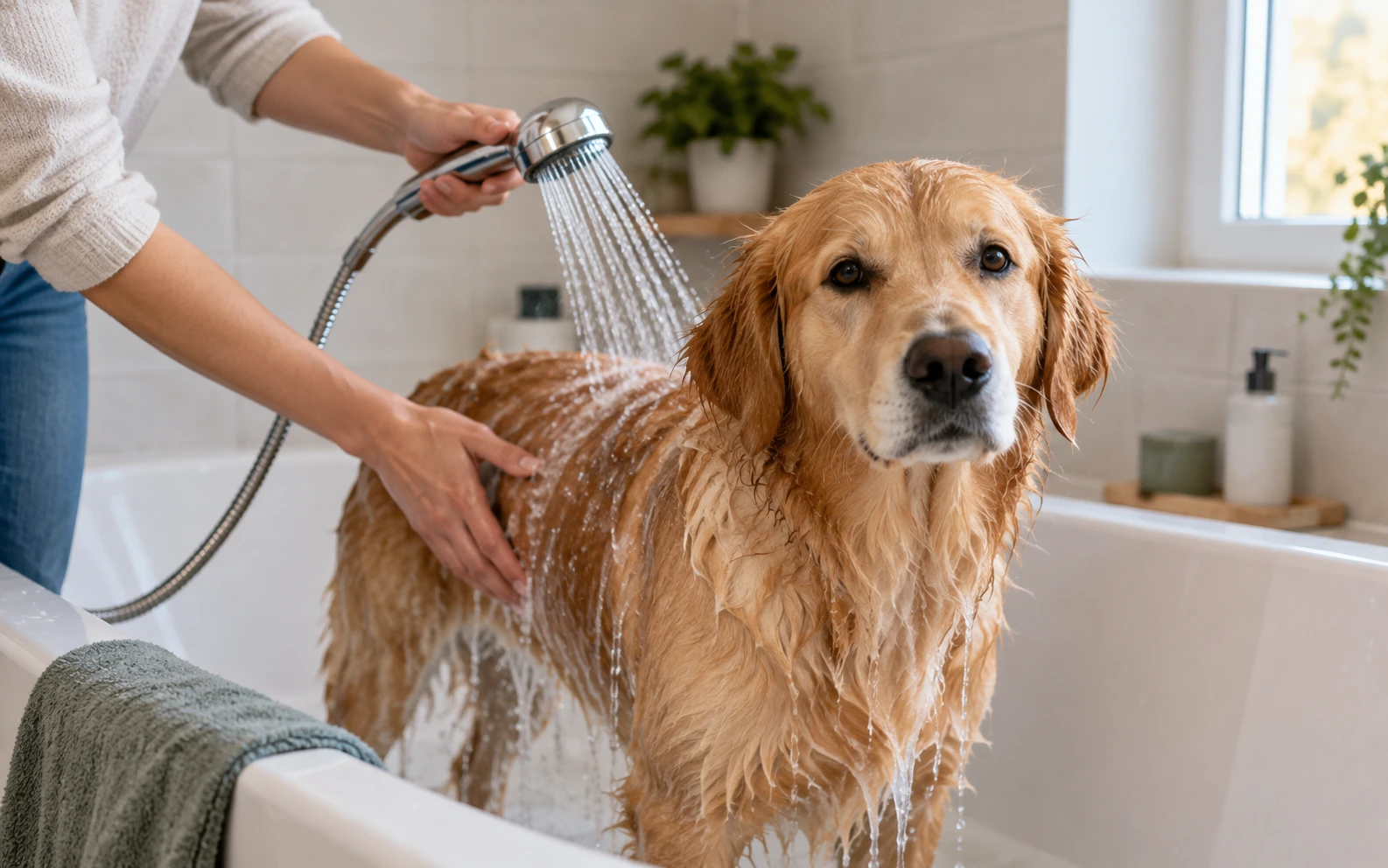
For ordinary baths, use a shampoo formulated for dogs. Human shampoos, including products marketed as gentle for babies, are not the default choice for canine skin. Follow the label, use lukewarm water, keep shampoo out of the eyes and ear canals, rinse away all residue and dry the coat appropriately.
If the dog becomes distressed, do not force the bath to completion simply to meet a routine. Watch for signs of stress in dogs, and seek suitable grooming support if handling or the coat condition makes home washing difficult.
When does your dog need veterinary advice instead of another bath?
Persistent scratching, redness, sores, hair loss, significant flaking, greasy skin or odor that returns shortly after washing can indicate a problem that ordinary shampooing will not solve. A veterinarian can assess the cause and, if needed, recommend a specific product and bathing schedule. Do not copy medicated-shampoo instructions from another dog's treatment plan.
How to plan the next bath
After bathing, note the date, the reason for washing, the product used and how the coat and skin felt in the following days. If repeated baths are prompted by mud, the useful change may be better between-bath cleaning. If discomfort or unusual odor keeps recurring, the next step is a skin assessment, not an ever-shorter bathing interval.