Decision guide
Use this as a router, then read the relevant parts of the whole-dog framework below before making a stronger interpretation.
| What you see | What to do next |
|---|
| The dog stays loose, mobile and free to disengage | Continue only while that overall pattern remains |
| Several subtle changes appear together | Pause the interaction and reduce social pressure |
| The dog becomes markedly still, tense or focused | Stop advancing the interaction and create more space |
| A new body-language change persists without an obvious trigger | Note when it began and consider veterinary advice, especially if other signs of discomfort appear |
Start with the dog's normal baseline
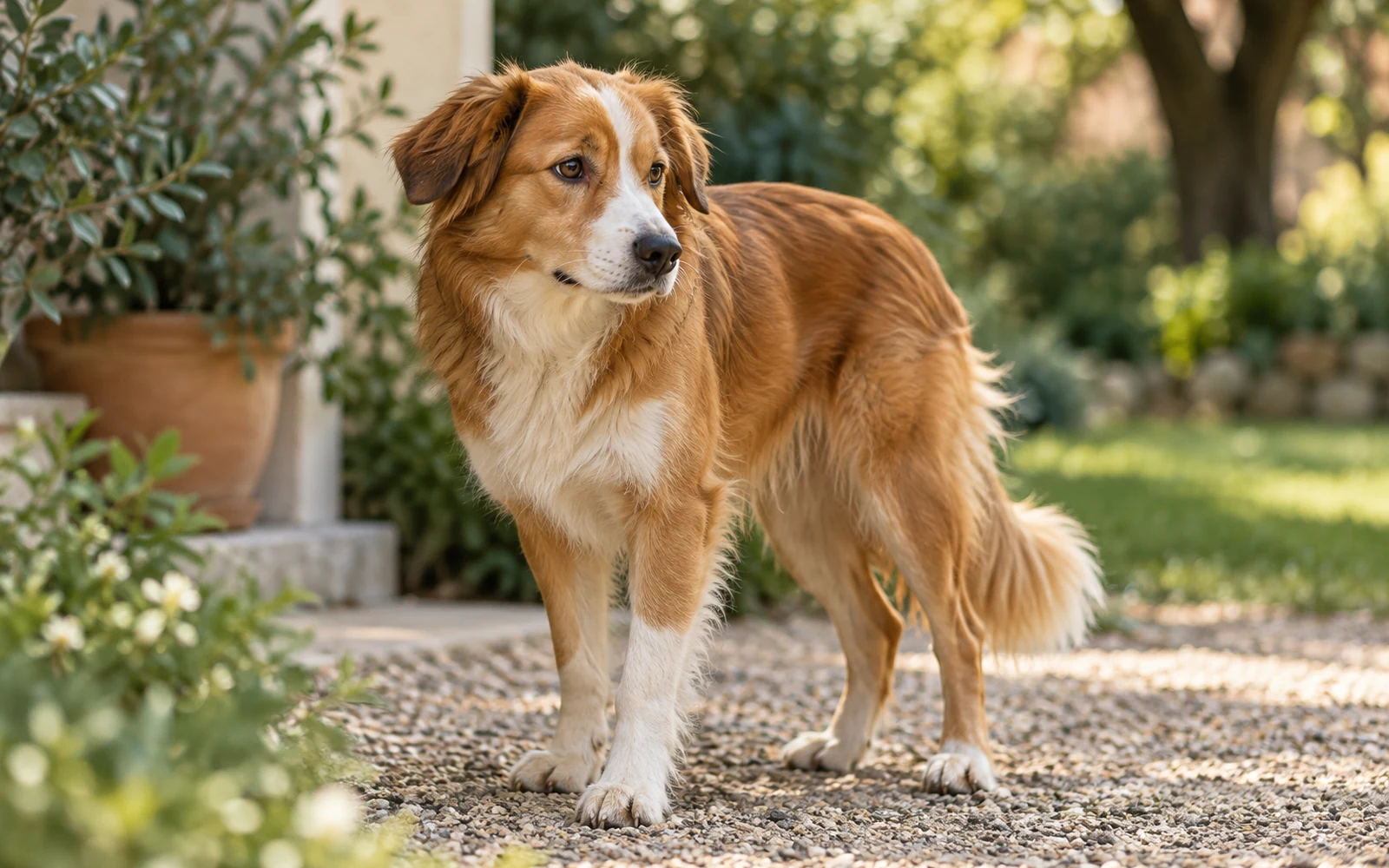
A useful reading begins in an ordinary, low-pressure moment. Notice how the ears normally rest, where the tail naturally sits, how the mouth looks, how the dog carries weight and how freely the body moves. Anatomy changes what is visible: a naturally curled tail, floppy ears, long facial hair or a short muzzle can make one dog look very different from another.
The useful question is not “What does this ear position always mean?” It is “What changed for this dog when the situation changed?” A mouth that closes when a stranger bends over the dog matters more when the dog also stops moving, turns the head away and shifts weight backward.
Use five questions to read the whole dog
1. What changed in the environment?
Context gives the signals a job. Lip licking beside a food bowl is different from lip licking during restraint. A fast-moving child, another dog approaching on leash, a veterinary exam, a favorite person arriving and a quiet nap all create different starting conditions.
2. Did the body become looser or tighter?
Muscle tone and movement often reveal more than a single tail or ear position. Loose curves, fluid movement and easy changes of position fit a more comfortable picture. Stiffness, freezing, tightly controlled movement or a mouth that suddenly closes deserve more attention when they appear together.
3. Is the dog choosing to approach, disengage or create distance?
Movement adds practical meaning. A dog may step closer to investigate, lean away, turn the head, move behind a person, leave the area or alternate between approach and retreat. Mixed movement can mean the dog wants information or access while also feeling uncertain.
4. What are the face, ears and tail adding?
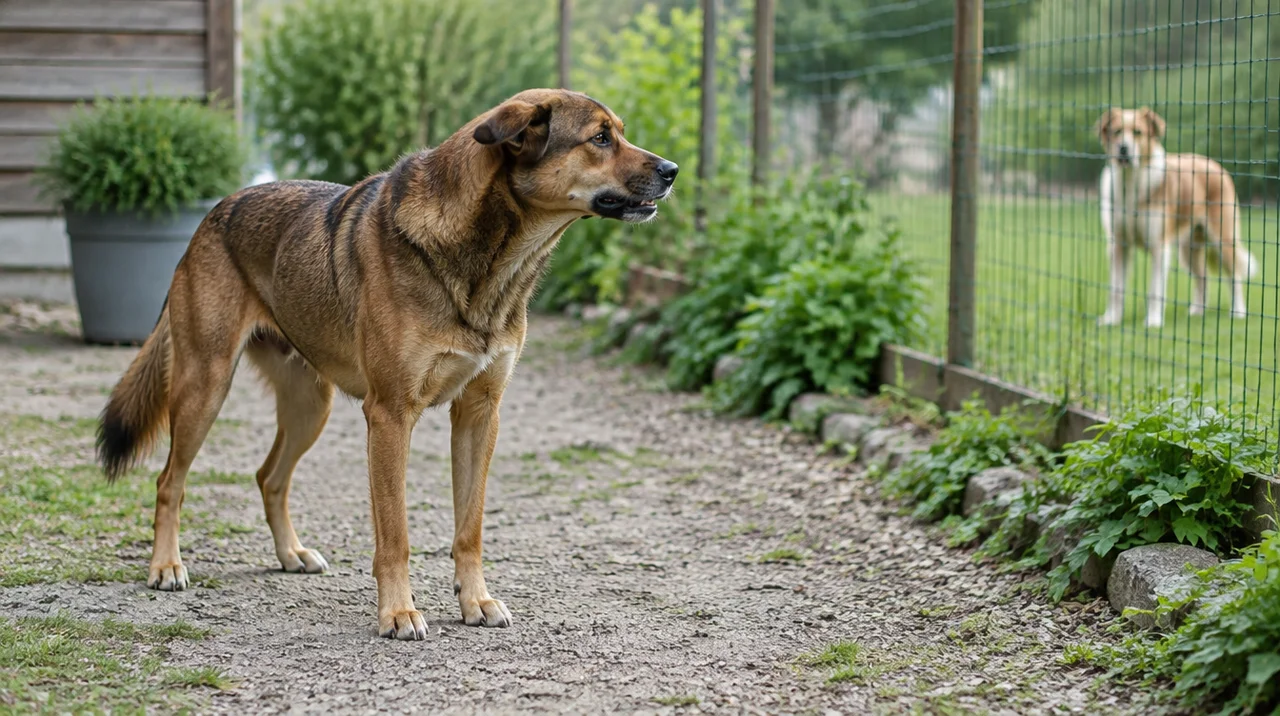
Eyes may stay soft or become fixed; the whites may show as the head turns while the gaze remains on something. Ears may move forward, sideways or back relative to their normal position. Tail height, speed and stiffness are useful only when compared with the rest of the body and that dog's usual carriage.
5. Did the intensity rise, fall or stay the same?
A transition can be more informative than a snapshot. A dog that was moving freely and then freezes when a hand reaches toward them has given you new information. A dog that glances away, shakes off and returns with a loose body is showing a different pattern from a dog whose posture keeps tightening and whose attention stays fixed.
Read body parts as contributors, not verdicts
Eyes and face
Soft eyes, normal blinking and a relaxed mouth can contribute to a comfortable picture. A fixed stare, narrowed or unusually wide eyes, visible eye whites, facial tension or a mouth that suddenly closes can add weight to a concern picture. The face is most useful when it changes at the same moment as the body or movement.
Ears
Ear position is mainly useful as a change from normal. Ears that move forward may accompany interest or arousal. Ears drawn back can appear with uncertainty, fear, social appeasement or friendly greeting. Breed shape and natural carriage can make ear signals less obvious, so ears should not carry the interpretation alone.
Tail
A wag is movement and arousal, not a guaranteed emotional label. A broad, loose wag paired with a relaxed body tells a different story from a high, tight or twitchy wag paired with stiffness. Normal tail carriage also varies widely between dogs, which is why baseline matters.
Posture and weight
A dog may lower the body, shift weight back or make themselves smaller when trying to avoid pressure. Another may stand tall and lean forward. Rather than assigning a personality label, ask whether the dog can move freely, whether distance is increasing or decreasing and whether tension is building.
Small, context-dependent behaviors
Yawning, lip licking, looking away, sniffing or lifting a paw can appear when a dog is uncertain or uncomfortable, but they also happen for ordinary reasons. Timing gives them value. A tongue flick just after someone reaches over a dog is more informative than licking immediately after eating.
Know when a broad reading is no longer enough
Some reader questions deserve their own decision process instead of another signal list.
Repeated lip licking, pacing, freezing, avoidance and other patterns are easier to use when you know how early signs differ from stronger ones and what to change in the environment. The full practical route is in signs of stress in dogs.
A growl is also not a body-language diagnosis by itself. It can occur during play, around valued items, during handling or when a dog wants more distance. Why dogs growl focuses on what the sound means in context and what to do next.
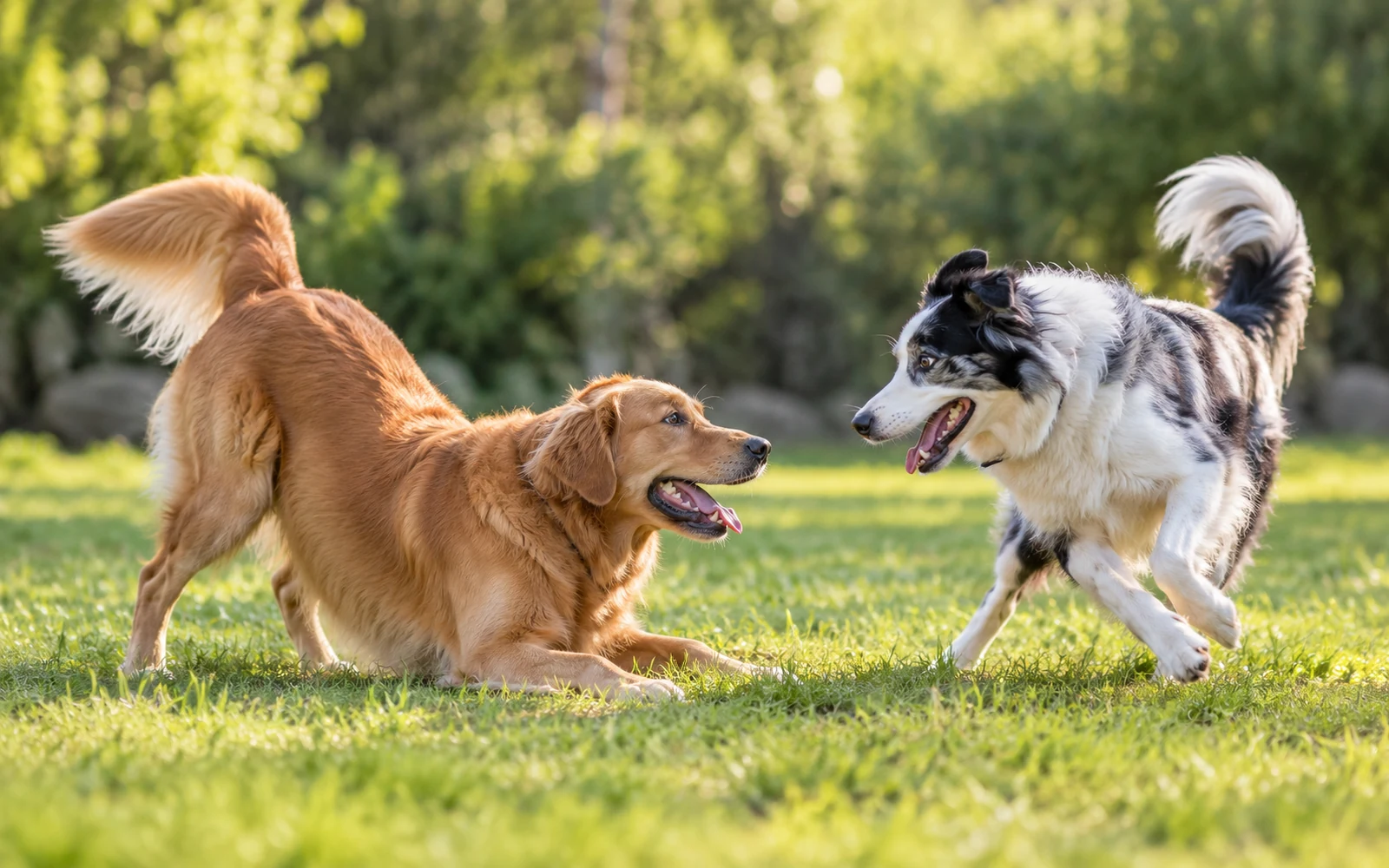
Rough play can contain chasing, body contact, open mouths and loud vocalization. The better test is whether the interaction stays loose, voluntary and interruptible. Dog play body language separates mutual play from the signs that it is time to pause the interaction.
A worked example: a visitor reaches to pet your dog
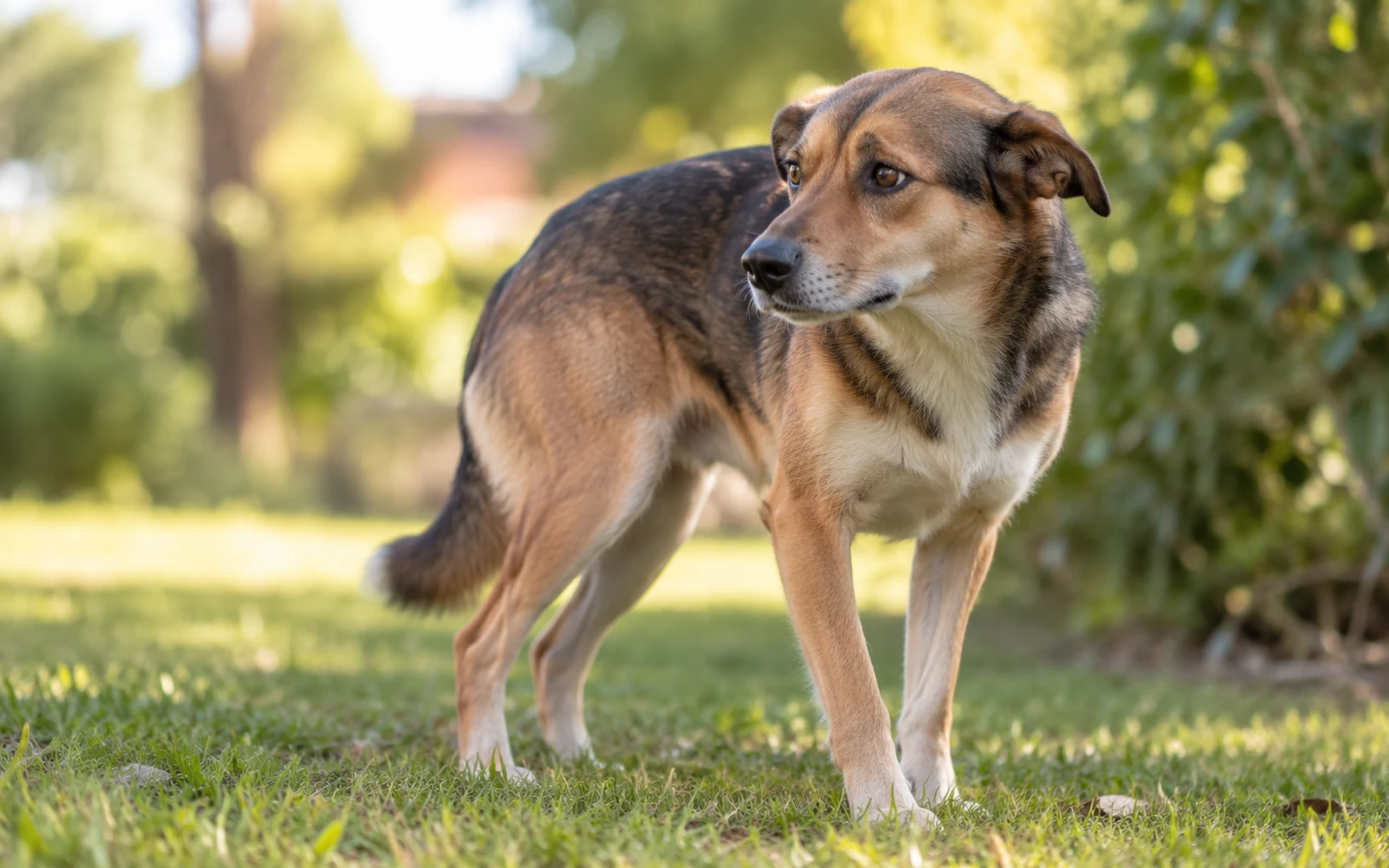
Suppose your dog usually greets familiar people with loose movement and an easy approach. A visitor arrives and the dog walks forward, then stops when the visitor bends over and reaches toward the head. The mouth closes, the ears shift back, the dog turns the head away and the weight moves toward the rear legs.
Do not let the initial approach outweigh the later changes. Ask the visitor to stop reaching, give the dog room to move away and let the dog decide whether to approach again. If the body loosens after the pressure disappears, you have useful information about this dog's comfort with that type of greeting.
The observation describes this dog in this moment. It does not prove that the dog is generally “friendly,” “fearful,” “dominant” or “aggressive.”
Signals people often misread
A wagging tail: use the tail as one part of the whole pattern. Speed, height, stiffness and the rest of the dog matter.
Rolling onto the back: some dogs invite contact this way, while others roll over tensely when worried. Loose muscles and active solicitation differ from a tucked tail, pinned ears and a rigid body.
Looking away: turning the head or avoiding eye contact can reduce social pressure. It is not automatically stubbornness or refusal to listen.
Raised hackles: piloerection indicates arousal. Context and the rest of the posture are needed before deciding whether that arousal is playful, excited, worried or confrontational.
A quiet dog: absence of barking or growling is not proof of comfort. Freezing, avoidance and tightly controlled movement can matter even when the dog makes no sound.
When the picture is uncertain
Choose the response that requires the least assumption. Stop adding pressure, allow more distance and watch whether the dog becomes looser and more able to disengage. Do not repeat the same touch, approach or restraint just to “test” whether the signal happens again.
Video can make subtle changes easier to notice later. Record ordinary, safe interactions from a distance rather than provoking a reaction. Compare several low-pressure clips to learn the dog's normal posture and movement.
When signals conflict, give greater weight to sudden tension, freezing, repeated attempts to leave and escalating intensity than to a single apparently friendly cue. A dog that cannot move away has not necessarily chosen to stay.
When a change deserves professional help
A sudden or persistent change in posture, tolerance or behavior can have a medical component. Veterinary assessment is appropriate when the change is unexplained, particularly when it appears with reduced activity, appetite changes, limping, sensitivity to touch or other signs of discomfort.
Repeated snapping, biting, intense fear or situations where you cannot safely create distance need individualized help rather than more interpretation from a checklist. Start with a veterinarian when pain or illness may be involved; ongoing behavior concerns may also benefit from a qualified behavior professional who can observe the dog and the exact context.
Build skill in ordinary moments
Practice when nothing dramatic is happening. Once or twice a day, spend 30–60 seconds observing your dog during rest, a walk, play or a calm greeting. Note the context, whether the body is loose or tense, the direction of movement and one change from baseline.
The useful skill is not memorizing more signals. It is noticing changes earlier, checking them against the whole dog and responding before the dog has to communicate more intensely.